
 This is Post 3 of 4.
At this moment, the club is holding its annual Super Sci-Fi Book Sale at our downtown meeting locale. As such, there is no interactive ZOOM-chat component included with this month’s MonSFFA event.
But for our out-of-town club members and friends, we do offer today, here online, a few Halloween-themed items of interest, culled from our meeting archives of these past few years.
The Horror, The Horror…
For your perusal, then, we offer this dissertation on how the professionals scare their readers and audiences:
HORROR 101: HOW WRITERS AND FILMMAKERS SCARE THEIR READERS AND AUDIENCES
The oldest and strongest emotion of mankind is fear, and the oldest and strongest kind of fear is fear of the unknown.—H. P. Lovecraft (1890-1937), “Supernatural Horror in Literature” (essay, 1927; revised 1933-1934)
THE HORROR GENRE: SEVERAL DEFINITIONS
Let us begin by presenting a few definitions of horror offered by various scholars and/or practitioners of the genre, and one local fan:
Horror is a genre of fiction that is intended to disturb, frighten, or scare.—Philosopher and author Noël Carroll (born 1947), The Philosophy of Horror, or, Paradoxes of the Heart (1990)
A piece of fiction in prose of variable length…which shocks, or even frightens the reader, or perhaps induces a feeling of repulsion or loathing.—Literary historian J. A. Cuddon (1928-1996), of the horror story in his introduction to The Penguin Book of Horror Stories (1985)
In the simplest sense, a horror story is one that scares us…and the true horror story requires a sense of evil, not necessarily in a theological sense; but the menaces must be truly menacing, life-destroying, and antithetical to happiness.—Speculative fiction writer Darrell Schweitzer (born 1952), Windows of the Imagination: Essays on Fantastic Literature (1999)
Horror is fully a literary and screen genre expressly calculated to provoke uneasiness, revulsion, fear, and when well executed, terror. Horror’s tales of the supernatural, sometimes termed Gothic Fantasy, or dark fantasy, are intrinsically tied to the larger fantasy genre, while non-supernatural horror, more precisely described as psychological horror, habitually overlaps with mystery, detective, and crime fiction, and is frequently presented within the framework of a thriller. Horror seeks to create an eerie and frightening atmosphere, and shock the reader or viewer. Often, the key peril of a work of horror fiction can be interpreted as a metaphor for the larger anxieties of society.—Keith Braithwaite (born 1958), speaking at the October 14, 2023 meeting of the Montreal Science Fiction and Fantasy Association
The best horror fiction can and does comment on the human condition. The best is more than just the gush of blood and the quick shriek.—Author Robert R. McCammon (born 1952), who notes that elements of horror are often present in other genres, as well as in more mainstream fiction, citing Charles Dickens’ A Christmas Carol as an example. We will jump in, here, to offer, too, as a cinematic example in the same vein, the classic Holiday film It’s a Wonderful Life (1946), which includes a chilling alternate history sequence.
But bestselling horror author Stephen King (born 1947), who knows a thing or two about scary stories, is not particularly interested in definitions.
“It’s a trap, this matter of definition, and I can’t think of a more boring academic subject,” he states. Defining horror “is really a discussion of how many angels can dance on the head of a pin, and not really interesting unless those involved in the discussion are drunk or graduate students—two states of roughly similar incompetence.”
Fair enough. Suffice it to say that horror fiction scares us!
THE ALLURE OF HORROR: WHY ARE WE DRAWN TO IT?
Horror provides civilized man with the pulse-pounding thrill of facing dangers that most of us never have or will encounter, the fear of which, nonetheless, remain forever lodged deep within our collective psyche, a remnant of our species at its most primal. Horror is the rollercoaster ride willingly taken, knowing all along that we’ll survive and emerge unscathed. It’s the safe scare.
Reading horror fiction or watching horror movies allows us to confront our most deeply-seated fears without actually having to do so. It is an experience sought after for the sheer exhilaration of it; for the goosebumps, the hair-raising chill, accelerated breathing, racing heartbeat, the release of endorphins and an audible scream.
Writer Elizabeth Barrette (year of birth unavailable), in her essay “Elements of Aversion” (Creatio ex Nihilo, April-May 1997), has this to say on the topic:
The old “fight or flight” reaction of our evolutionary heritage once played a major role in the life of every human. Our ancestors lived and died by it. Then someone invented the fascinating game of civilization, and things began to calm down. Development pushed wilderness back from settled lands. War, crime, and other forms of social violence came with civilization and humans started preying on each other, but by and large daily life calmed down. We began to feel restless, to feel something missing: the excitement of living on the edge, the tension between hunter and hunted.
So we told each other stories through the long, dark nights. Sometimes we told happy stories, or sacred stories … but when the fires burned low, we did our best to scare the daylights out of each other. The rush of adrenaline feels good. Our hearts pound, our breath quickens, and we can imagine ourselves on the edge. Yet we also appreciate the insightful aspects of horror. Sometimes a story intends to shock and disgust, but the best horror intends to rattle our cages and shake us out of our complacency. It makes us think, forces us to confront ideas we might rather ignore, and challenges preconceptions of all kinds. Horror reminds us that the world is not always as safe as it seems, which exercises our mental muscles and reminds us to keep a little healthy caution close at hand.
STEPHEN KING’S THREE LEVELS OF HORROR
In, Danse Macabre (1981), Stephen King’s treatise on the genre, he lists three levels of Horror.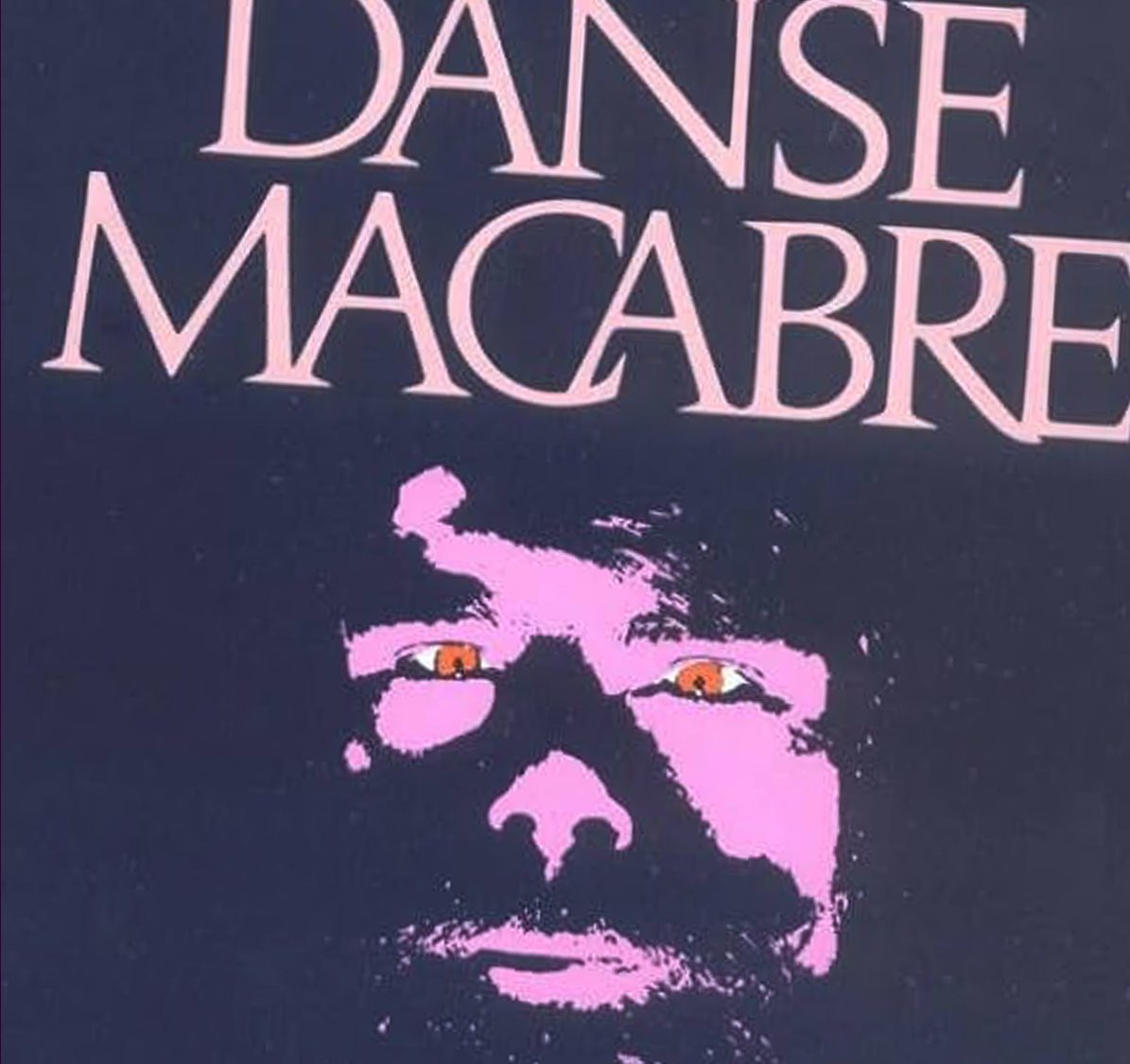
Terror is top-most, the premium level to which a horror writer or filmmaker should aspire, those delectably suspenseful moments leading up to the instant of violence, or a climactic reveal. Horror is the intermediate level, employed for shock value, presenting us with an alarming image—the monster!—whether in our mind’s eye or on screen. And Revulsion is bottom-level stuff, the cheap gimmick, vile and disgusting, meant to induce a gag-reflex.
Confesses King, “I recognize terror as the finest emotion and so I will try to terrorize the reader. But if I find that I cannot terrify, I will try to horrify, and if I find that I cannot horrify, I’ll go for the gross-out. I’m not proud.”
Proffering examples, and advice from genre professionals, we will explore these, and augment King’s list with a few entries of our own as we learn how horror writers and filmmakers manufacture the scares!
Let’s begin with…
SETTING:
An eerily sinister old castle, a decaying Victorian mansion, the deep, dark woods—perhaps to the point of cliché, these are the archetypal settings of a traditional horror story, replete as they are with the time-honoured trappings of the genre.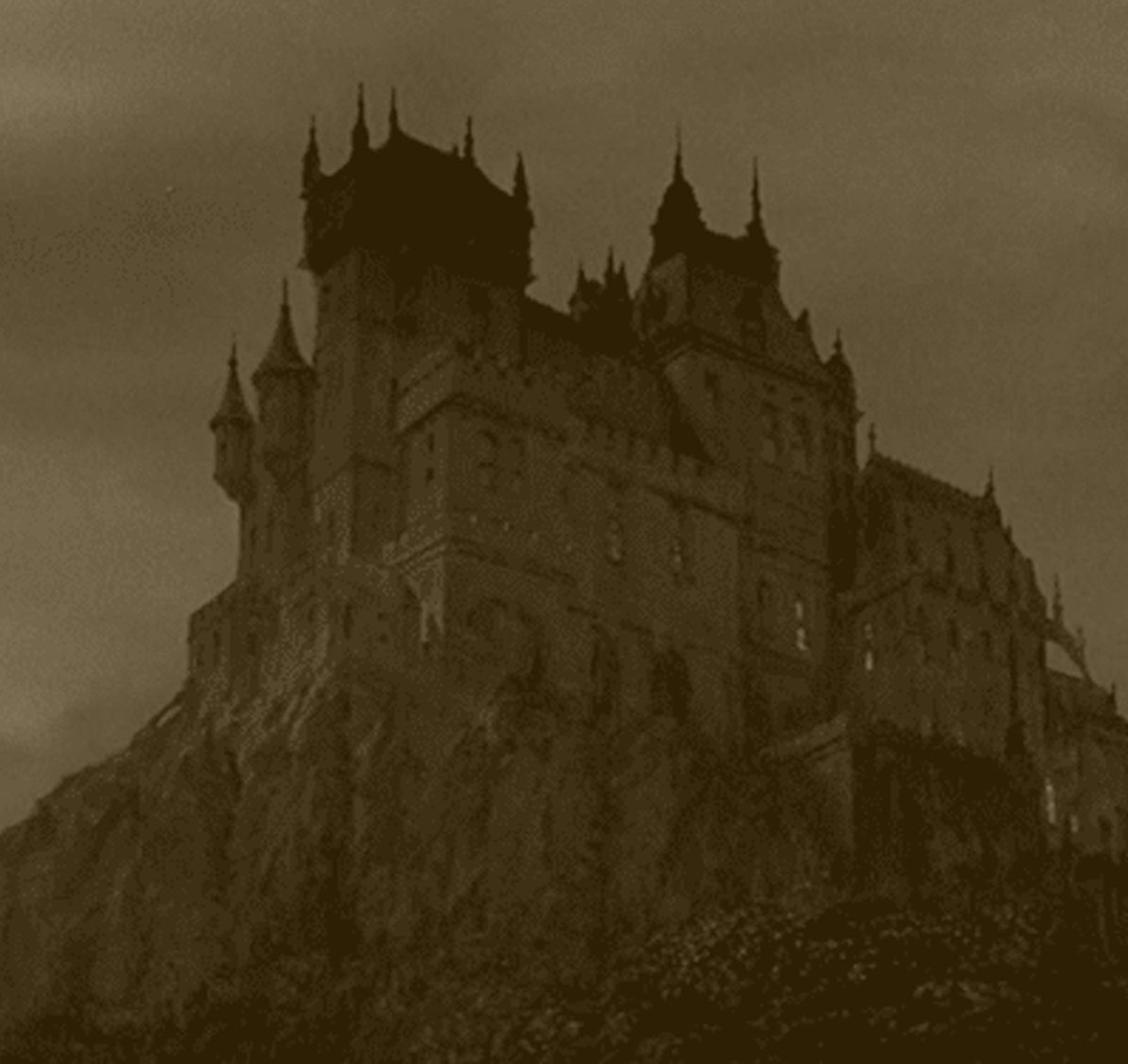
The castle—an imposing structure, parapets topping stout, stone walls enclosing the cavernous chambers within, wanly illuminated by flickering torchlight.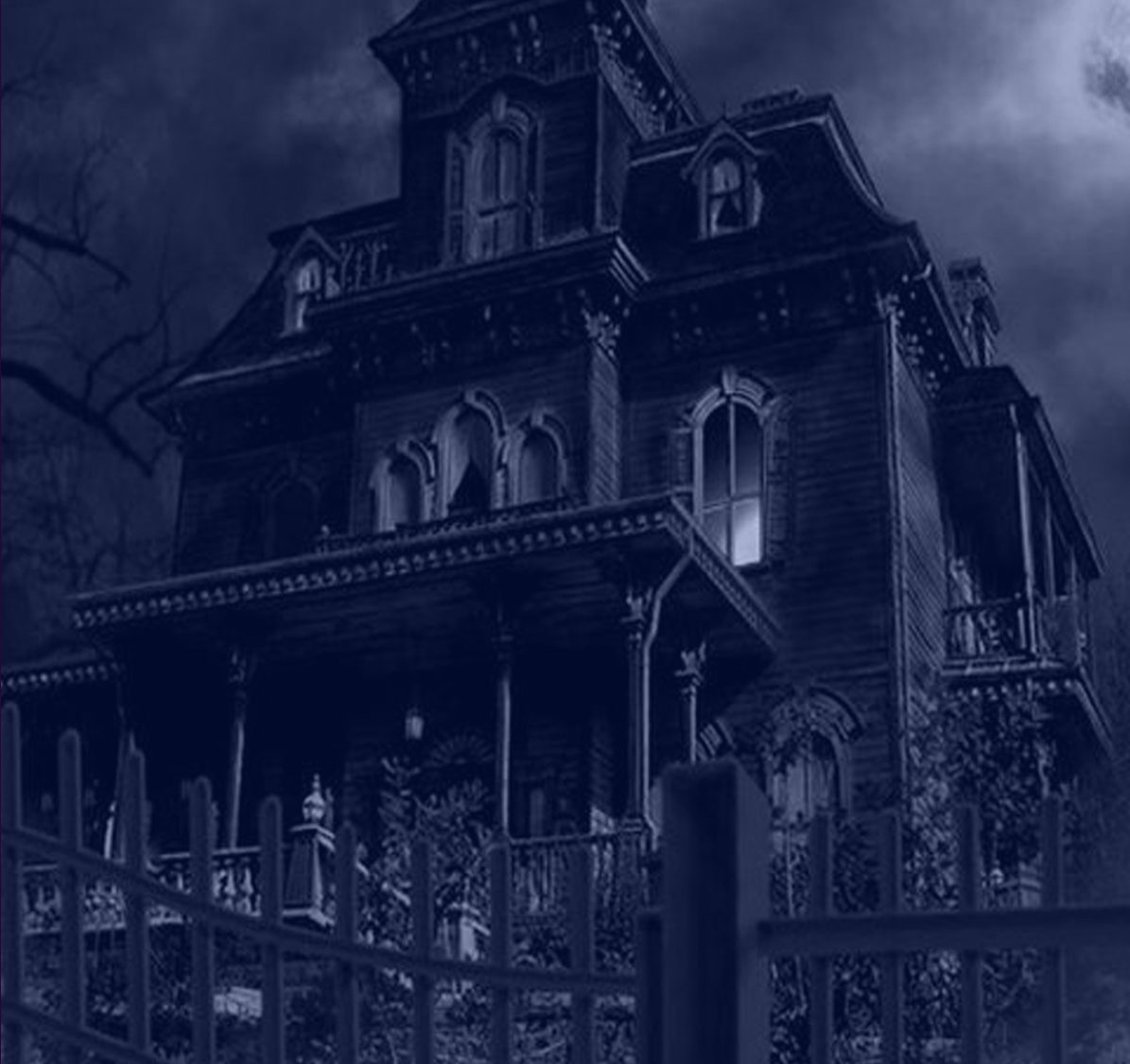
The mansion—dusty, dilapidated furniture resting in hoary obsolescence, blanketed in cobwebs and bounded by the tattered drapes that hang in each antiquated room, along with ancient portraits of the house’s former occupants, long-deceased.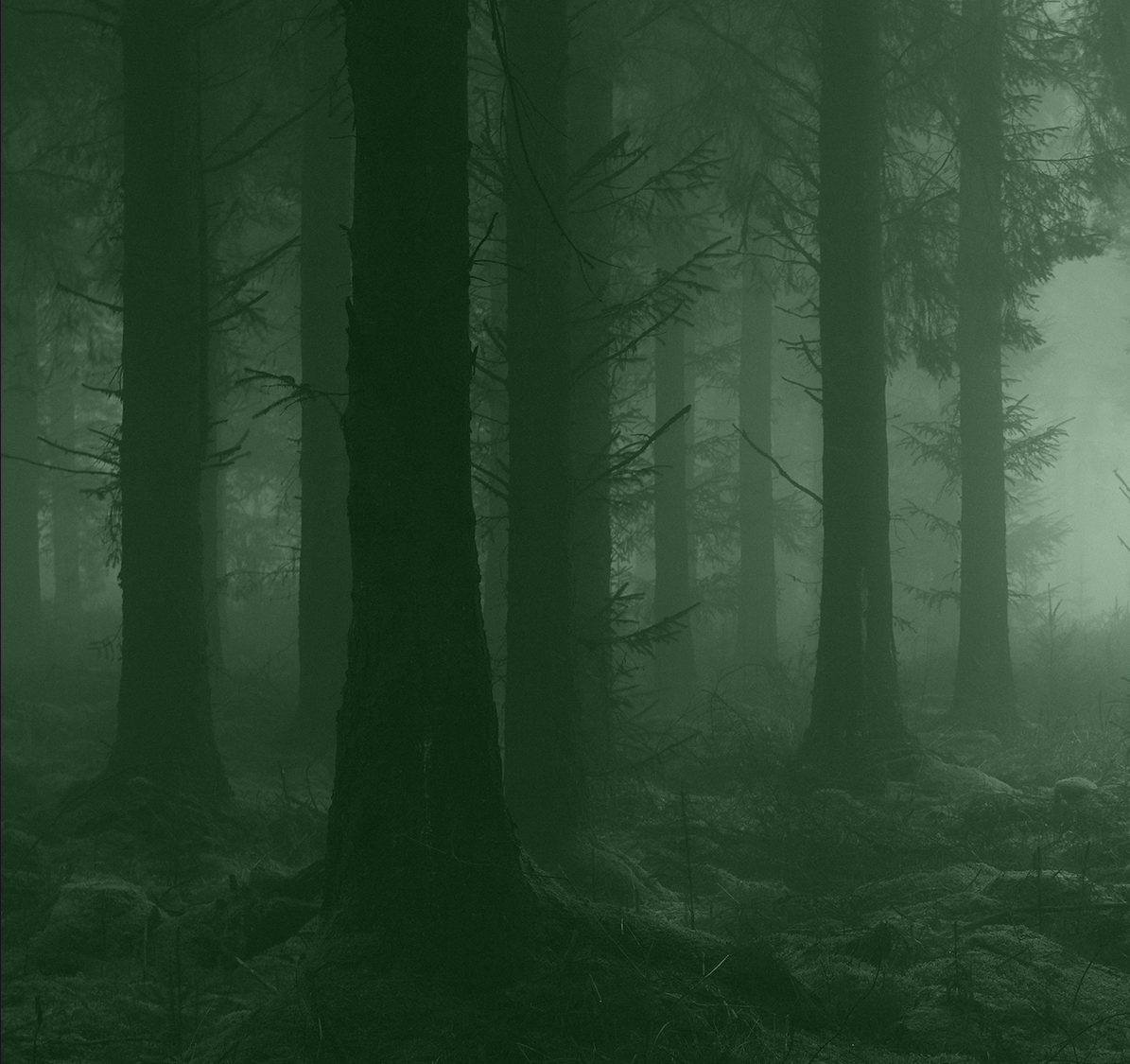
The woods—a dense, wicked growth of black, witch-cursed forest.
Whether set in such familiar territory, or in a contemporary, nondescript small town, a family home, a roadside motel that has seen better days, a remote farm, a notorious summer camp, aboard a modern airliner, or travelling the vast cosmos to other worlds in a spaceship, by employing evocative prose—words that conjure up feelings of dreariness, misery, and thoughts of death—the writer may plant in the subconscious mind of the reader a sense of gloominess, of unease, or of impending danger and demise.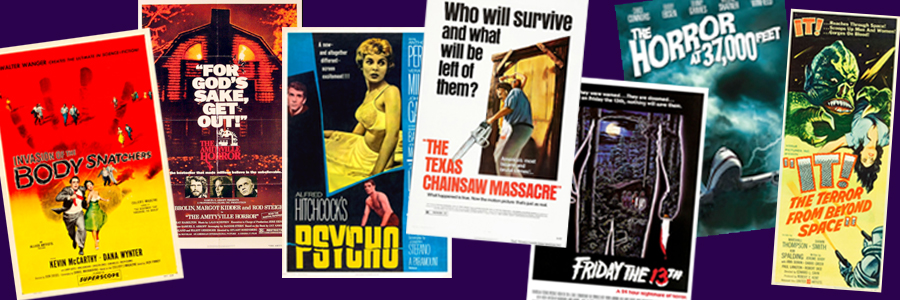
“The old house stood alone atop the hill, a stark grey against the afternoon’s pale sky,” might be more effective as “The archaic house stood a stark, ghostly grey against the afternoon’s melancholy sky, like a solitary gravestone atop a cemetery hill.”
Similarly, a filmmaker may use unconventional camera angles—low, long, askew—or exploit the power of editing—a lingering shot, cut-away, or slow dissolve—to obliquely educe the same mood.
ATMOSPHERE:
As atmosphere for a horror story, a dark and stormy night—as hackneyed as it may sound—is generally preferable to a bright, sunny day. Not that a skilled practitioner of the craft cannot wring dread out of a bright, sunny day!
MonSFFA president and horror fan Keith Braithwaite watched a lot of sci-fi, fantasy, and adventure films as a youngster, and one of the most unnerving moments he remembers unfolds on a sun-washed Mediterranean island. Keith got goosebumps as the colossal bronze statue of Talos awakened in the fantasy/adventure film Jason and the Argonauts (1963), sluggishly turning his head with a juddering metallic screech to lock eyes on the two Greek sailors who had, just moments before, been plundering a forbidden treasure stored within the statue’s massive stone pedestal. When, incredibly, the towering Talos stepped down off his platform and began pursuing the men, Keith recalls that his heart was racing!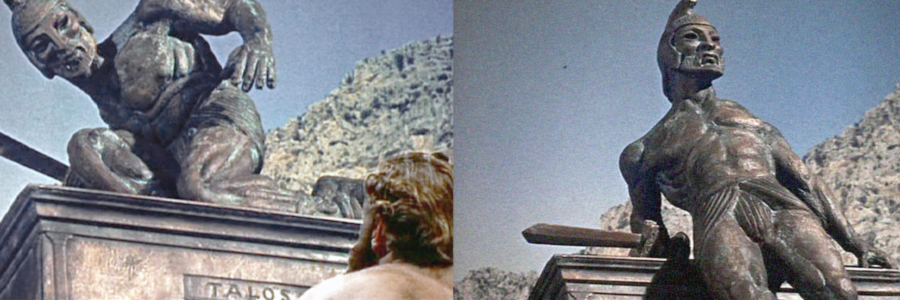
Viewing that sequence in retrospect, we can only admire the expertise with which it was put together—the suspenseful editing, the metal-twisting sound effect, the ominous musical score, and the slow but steady pursuit of the men by the indomitable giant all came together to deliver a good scare, in broad daylight, no less, and in what isn’t even a proper horror movie!
But as a rule, it’s usually the somber darkness of night, or the shroud of a thick fog reaching across a shadowy moor, or a thick and tangled forest that deliver atmosphere in spades.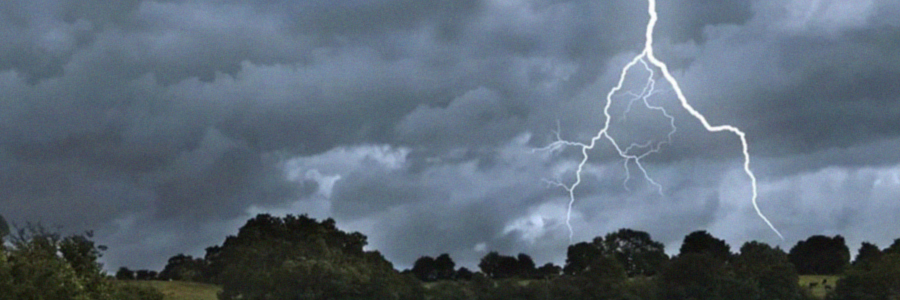
Consider a thunderstorm, advised seasoned horror writer and editor Charles L. Grant (1942-2006). The sky begins to darken, clouds roll in, distant thunder can be heard and lightning flashes on the horizon. “You can feel the storm coming, and there’s nothing you can do about it.” The weather advances, slowly, inexorably. And you out in the open without your raincoat or an umbrella; you are going to get wet!
Grant offers that a writer wants his or her reader to experience that kind of tension in order to ultimately deliver the chills. “If all hell breaks loose right away, what’s left?” he asked rhetorically.
Atmosphere, whether meteorological or metaphorical, sets the appropriate tone.
CHARACTERS:
As with any story in any genre, well-crafted protagonists are of principal importance. Good characters are essential to a good story.
The simple truth of it, says bestselling author Dean Koontz (born 1945), is that the reader must readily identify with and care about the lead characters. Noted Charles L. Grant, “If a character is odious, who cares what’s waiting for him up in the attic?”
To wit, we sympathize with shy, mousy, insecure high school girl Carrie White. We welcome the empathy and kindness of classmate Sue Snell, who felt remorse at having initially taunted Carrie. But we care not for the fate of vain, self-centered bully Christine “Chris” Hargensen and her mean-spirited friends.
Given what Carrie has experienced—the girl’s character arc takes her from victim to vengeance—we understand and even cheer her exacting revenge on her tormentors. And, we are pleased to see that Sue survives and uses the “Black Prom” incident to shine a light on high school bullying.
“Good dark fantasy grows out of the fears of the characters,” Grant further declared. “The story dictates where the chills and shocks will be; the people dictate what the story will be. Work on the people and the shadows will do the rest.”
Koontz, meanwhile, outlines five errors of characterization that inhibit a reader’s developing of sympathy for a lead character:
1) The lead character must not act irrationally or so stupidly as to get him/herself in trouble as a result. If he/she moves the family into a house that turns out to be haunted and weird shit starts happening, the protagonist gets out of the house. No reasonable person would stay, and the reader will have little sympathy for anyone who does. In order to keep the family in the house, some convincing reason must exist.
2) The character must not remain passive. He/she must take logical action to deal with the antagonists—human or otherwise—which plague him/her. Hiding in a corner…hoping the bogeyman will go away doesn’t cut it with readers. No one likes a wimp.
3) On the other hand, your characters must not be supermen/superwomen whose actions always result in success. This removes any possibility of suspense.
4) Characters must have lives outside of the central story. They should have a past that shaped them, perhaps equipping them to deal with the immediate situation. A character with personal demons to fight, as well as an actual demon, is a well-rounded character rather than one of the cardboard variety who engenders little sympathy from readers.
5) A character must not be concerned solely with his/her own survival when others are facing the same dangers. He/she must have sympathy for a fellow character—a sibling, son or daughter, girlfriend, etc.—and be willing to put him/herself in harm’s way to help that fellow character. A protagonist who abandons others to their fate while saving him/herself is not a character readers will warm up to.
THE MOMENT OF DISQUIET:
This is the moment in a narrative when the reader or viewer, and often the protagonists, as well, first notice that something is a little off, a bit odd, not quite right. It’s nothing overt, not a signal of any immediate threat, but it’s just enough to raise one’s hackles ever so slightly, and to put one on guard.
It’s the moment when the dog sniffs the air and starts barking at the darkness out beyond the front porch. It’s the pause the hikers take while trekking across the lowlands to remark on an uncharacteristic silence as they realize that even the insects have ceased their ubiquitous chirping and buzzing. It’s when the phone line has gone dead at the isolated cabin-in-the-woods.
The Moment of Disquiet serves to offer an early inkling of looming danger, and foreshadows the deadly threat to come.
THE MOMENT OF VIOLENCE:
This is, quite simply, the moment when the antagonist of the piece commits an act of aggression. It’s the split-second that sees the fiendish vampire quickly lunge at his comely young prey, sharp fangs savagely mauling her delicate neck! It’s the instant that the axe-wielding serial killer launches his assault on the hapless teenagers frolicking on the beach! It’s when the giant, carnivorous insects overrun the small, Southern-California town, feeding on the citizenry; or when the unrelenting zombie horde surrounds the post-apocalyptic survivors, inexorably closing in; or when the ferocious space monster ambushes the woefully unprepared astronaut-explorers!
REVULSION:
The lowest of Stephen King’s three levels of horror is Revulsion—the gross-out, the grotesque, the especially gruesome and gory! He gives the example of Regan projectile-vomiting in father Karras’ face in The Exorcist (1973). We’ll add another example: the bloodletting of victims in the Hostel movies (2005, 2007, 2011)!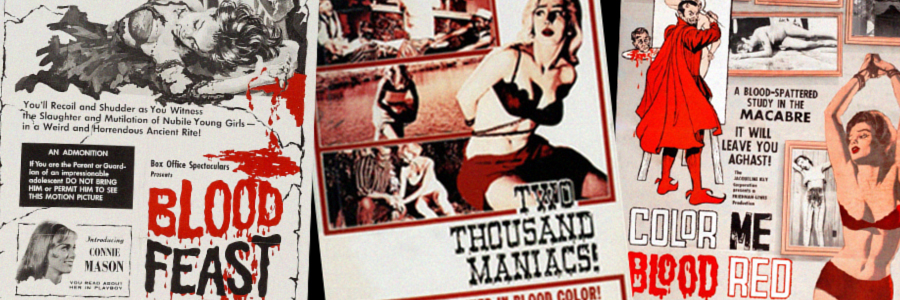
Although there are notable exceptions, Splatter films—more recently termed “Torture Porn” or “Gorno”—like Herschell Gordon Lewis’ seminal Blood Feast (1963), as well as his subsequent Two Thousand Maniacs! (1964) and Color Me Blood Red (1965), traffic in revulsion, frequently tinged with sex.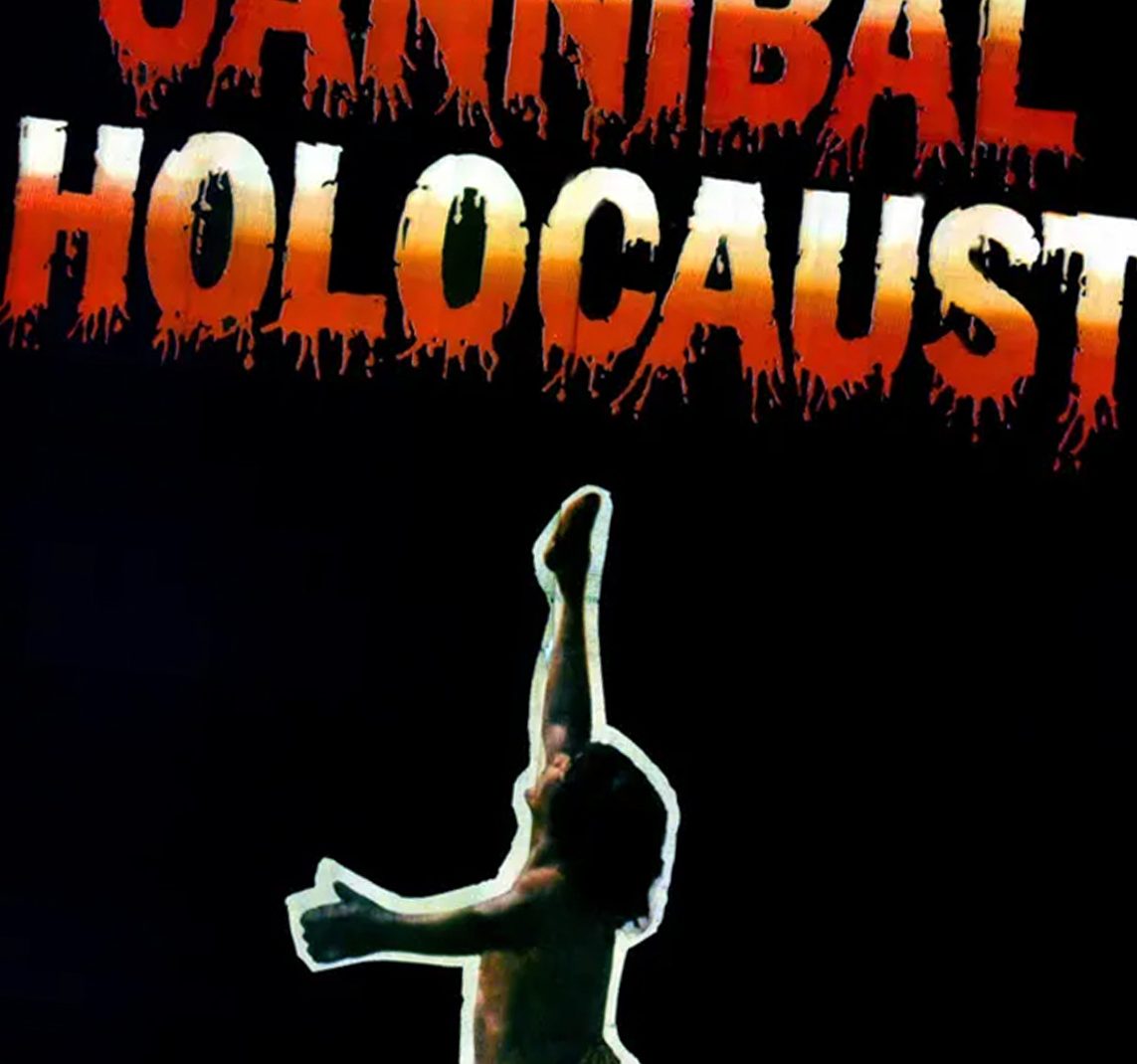
So too the excessively gruesome mockumentary Cannibal Holocaust (1980), presaging The Blair Witch Project (1999), along with a plethora of Slasher flicks pitting, usually, teenagers against a crazed, homicidal stalker relentlessly in pursuit.
Movie-goers are presented with little more than explicit depictions of vicious assaults, flesh-rending cruelty, torturous murder, and blood-soaked dismemberment! The goal is to assail audiences with the most unabashedly brutal violations and killings possible using the biggest, sharpest blades, or any of a variety of implements sickeningly repurposed as weapons.
But when such graphic violence becomes so exaggerated, so over-the-top as to become ludicrous and even comedic—Peter Jackson’s Braindead (1992), Idle Hands (1999), Stan Against Evil (2016-2018), chapters of the Evil Dead franchise (1981-2023)—the term “Splatstick” is applied.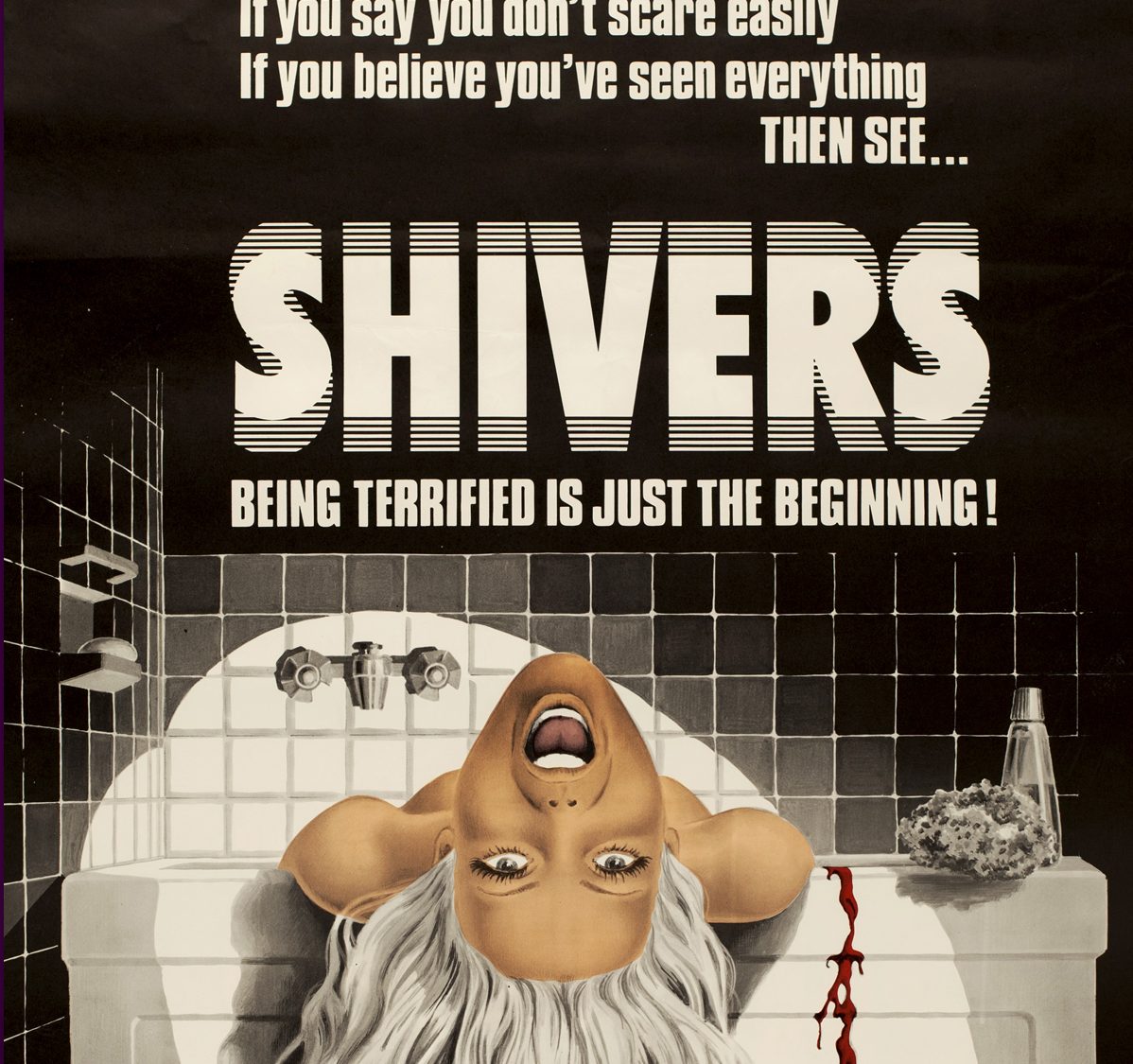
Body Horror, too, highlights the bloody, the stomach-turning, and the repulsive. Canadian director David Cronenberg is widely considered a virtuoso of this sub-genre; his Shivers (1975) and Rabid (1977) are prime examples of oozing, gut-wrenching, parasitic and mutated corruptions of the body.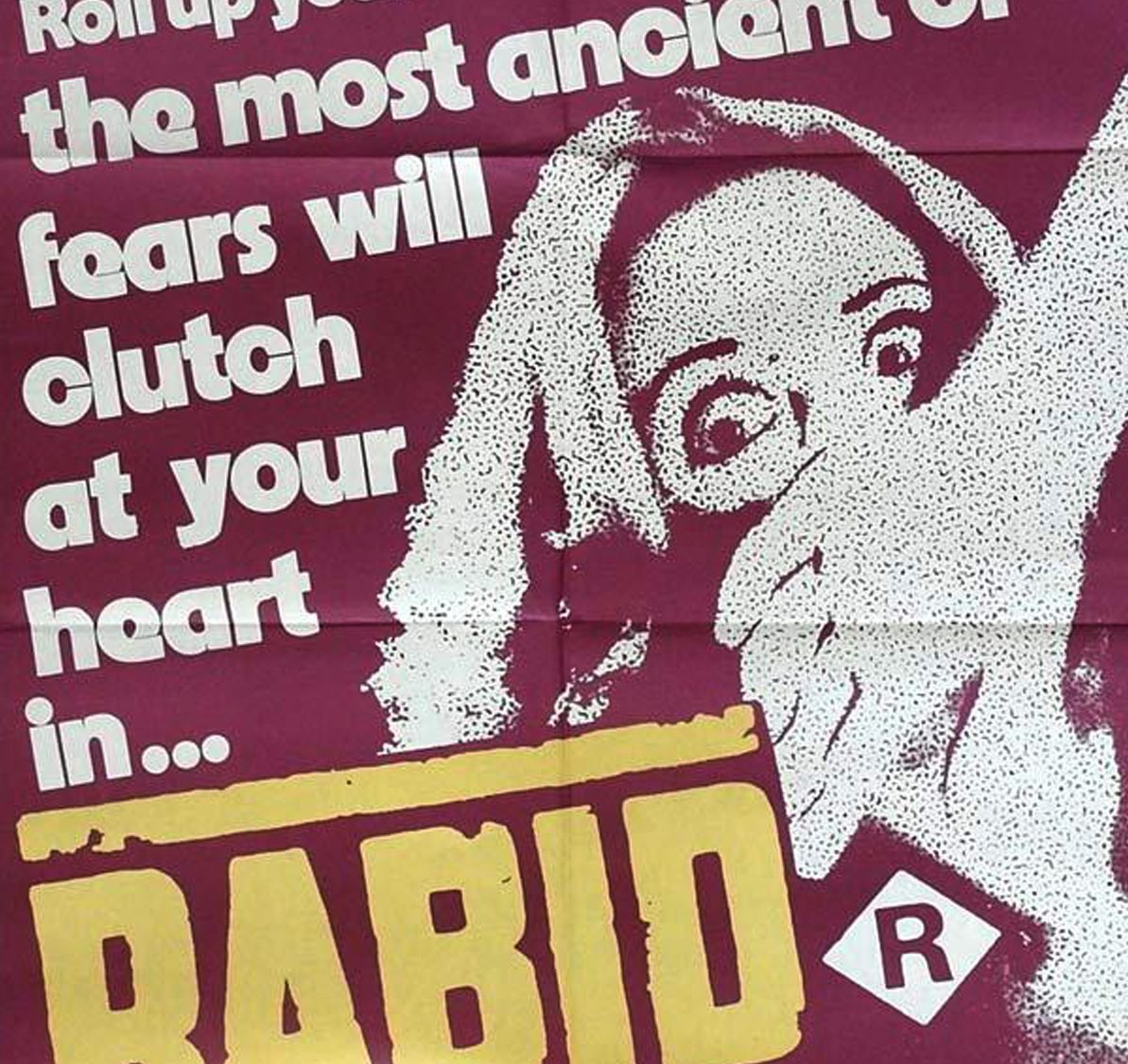
Based on the George Langelaan sci-fi/horror short story of the same name, The Fly (1958) is a cinematic precursor to the Body Horror films of the 1970s and 1980s, and Cronenberg’s 1986 remake fully embraces the form.
Franz Kafka’s novella Die Verwandlung (in English, Metamorphosis; 1915), in which a man inexplicably transforms into a giant insect, is an example of Body Horror before it was so labelled. Other literary examples date back even further; Mary Shelley’s Frankenstein, for instance.
A manipulation of our natural fight-or-flight reflexes—we gasp, retch, flail, scream, look away, run away—Splatter, Slasher, and Body Horror are the genre at its most visceral. Readers and viewers, however, are not so much terrified by this fare as they are revolted. It’s a cheap scare, a tawdry trick dependent upon our involuntary gut reaction to the graphic, bilious, repugnant carnage laid before us rather than on the far more enduring terror our own imaginations can awaken when we are skillfully prompted to contemplate our most profound fears.
THE LEWTON BUS (JUMP–SCARE):
The audience watches intently as a character slowly, cautiously, nervously advances down a dimly lit hallway, baseball bat in hand, raised, ready to swing, fearing that an intruder may have entered the house.
Suddenly, a flurry of sound and motion!
The family cat has jumped out from behind a cabinet, knocking over and shattering a vase.
Movie-goers inevitably jump back in their seats, catching their breath, some letting out a squeal! This is a Jump-Scare, or Pop-Out, the cinematic technique of introducing, without warning, out of the blue, a surprising distraction to either abruptly relieve accumulated tension, or introduce to proceedings an unexpected disruption, thus startling the audience.
Here we have another filmmaker’s trick, banking on an instinctive human reaction from viewers and guaranteed to elicit a jolt.
While a well-executed Jump-Scare can be admired, the gag has grown so very common in horror cinema as to become banal. Many critics dismiss as second-rate horror films that rely too much on Jump-Scares. Audiences have learned to recognize the set-up, and they know what’s coming. But even so, they still react as the filmmaker knows they will! It’s akin to that recoil we all experience when turning the crank of a Jack-in-the-Box toy—we know “Jack” is going to pop out at any moment, we just don’t know precisely when, and we can’t help but flinch when he does.
What we know today as the Jump-Scare was popularized in the 1940s by producer Val Lewton’s specialized B-movie unit, dedicated to turning out horror movies. A gifted, hands-on producer for the then-faltering RKO Studios, Lewton’s noire, marvelously atmospheric output belied the meagre budgets allotted his team.
Their first film was Cat People (1942), the story of a beautiful young woman who believes she is beset by a hereditary curse that sees her transform into a fierce panther when sexually aroused. As such, she fears consummating her recent marriage.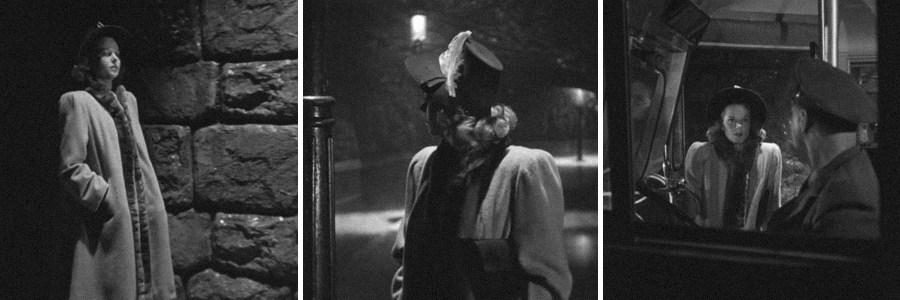
In one scene, jealous of a rival who has developed a fondness for her husband, she follows the woman home. It’s night, with only streetlamps providing intervals of light as the camera cuts back and forth from the pursued to the pursuer. The woman followed is uneasy, repeatedly glancing behind her, sensing that somebody—or something—is tailing her. She quickens her pace, with the clicking of her high-heels on the sidewalk audibly intensifying the tempo of the sequence. Fearful, she stops under an oasis of welcome light, hugging the lamppost and again apprehensively glancing back. What might be a feline growl is heard, just for an instant, before a bus unexpectedly pulls up, pneumatic brakes hissing loudly as the driver opens his door and beckons her in. Before climbing aboard, she spies movement in the bushes above a high stone wall paralleling the sidewalk—just the wind, or something else?
And so from this sequence was the original term for a Jump-Scare coined: The Lewton Bus.
MUSIC:
The faint tremolo of strings, rising to a crescendo as we creep ever closer to a shock, the driving bass of a chase sequence, the piano melody conveying a quiet moment of relief from the mayhem… In horror cinema and television, accompanying music helps to set the mood—tense, frantic, ghastly!
Memorable music from horror films and television series include that of Alfred Hitchcock Presents (also known as The Alfred Hitchcock Hour, 1955-1965; theme music by Charles Gounod), The Twilight Zone (1959-1964; theme music originally by Bernard Herrmann, subsequently by Marius Constant), Psycho (1960; score by Bernard Herrmann), Jaws (1975; score by John Williams), The Omen (1976; score by Jerry Goldsmith), Halloween (1978; score by John Carpenter), The Thing (1982; score by Ennio Morricone), Creepshow (1982; score by John Harrison), and The X-Files (1993-2018; theme music by Mark Snow).
I would be remiss not to mention the likes of Herman Stein, Hans J. Salter, Heinz Roemheld, and Britain’s James Bernard, to name just a few of the many unsung or lesser-known film composers collectively responsible for establishing the soundtrack of sci-fi/horror cinema during the first half of the 20th century. Along with selections of classical music, the stock-music compositions of this cohort comprised the scores of early horror films like Universal’s Frankenstein (1931), The Mummy (1932), The Wolf Man (1941), and House of Horrors (1946). Often working uncredited, this largely anonymous group of musicians also provided scores for sci-fi/horror B-movies and classics like It Came from Outer Space (1953), The Creature from the Black Lagoon (1954), This Island Earth (1955), and The Quatermass Xperiment (1955), first of Hammer’s Quatermass films. The modern stars of genre film composing took their cues from such originators.
HORROR:
This middle level of horror, King states, delivers shock value! It’s the reveal, the moment the masked killer, the slimy creature, the unspeakable aberration appears before the protagonists in all its slavering glory, full monty, if you will. When well executed, either by vivid, descriptive prose or visual effect, we are sufficiently horrified at the monster, the very source of our fear.
In “The Call of Cthulhu” (1928), H. P. Lovecraft describes a “Horror in Clay,” not, in fact, Cthulhu himself, but an artistic interpretation of the cosmic entity, for as any Lovecraft reader knows, the legendary Great Old One, who even primitive men have never beheld, has for eons laid inert with others in a sunken city beneath the sea. Telepathically inhabiting the minds of men, “moulding their dreams,” Cthulhu is worshipped by secret cults and awaits the proper alignment of stars that will signal his resurrection.
In his inimitable style, Lovecraft presented readers with a tiny, rectangular bas-relief, depicting “…a figure of evidently pictorial intent, though its impressionistic execution forbade a very clear idea of its nature. It seemed to be a sort of monster, or symbol representing a monster, of a form which only a diseased fancy could conceive. If I say that my somewhat extravagant imagination yielded simultaneous pictures of an octopus, a dragon, and a human caricature, I shall not be unfaithful to the spirit of the thing. A pulpy, tentacled head surmounted a grotesque and scaly body with rudimentary wings; but it was the general outline of the whole which made it most shockingly frightful.”
Further along, a small statuette of Cthulhu is examined, with Lovecraft offering more detail:
One sight of the thing had been enough to throw the assembled men of science into a state of tense excitement, and they lost no time in crowding around him to gaze at the diminutive figure whose utter strangeness and air of genuinely abysmal antiquity hinted so potently at unopened and archaic vistas. No recognised school of sculpture had animated this terrible object, yet centuries and even thousands of years seemed recorded in its dim and greenish surface of unplaceable stone.
The figure, which was finally passed slowly from man to man for close and careful study, was between seven and eight inches in height, and of exquisitely artistic workmanship. It represented a monster of vaguely anthropoid outline, but with an octopus-like head whose face was a mass of feelers, a scaly, rubbery-looking body, prodigious claws on hind and fore feet, and long, narrow wings behind. This thing, which seemed instinct with a fearsome and unnatural malignancy, was of a somewhat bloated corpulence, and squatted evilly on a rectangular block or pedestal covered with undecipherable characters. The tips of the wings touched the back edge of the block, the seat occupied the centre, whilst the long, curved claws of the doubled-up, crouching hind legs gripped the front edge and extended a quarter of the way down toward the bottom of the pedestal. The cephalopod head was bent forward, so that the ends of the facial feelers brushed the backs of huge fore paws which clasped the croucher’s elevated knees. The aspect of the whole was abnormally life-like, and the more subtly fearful because its source was so totally unknown. Its vast, awesome, and incalculable age was unmistakable; yet not one link did it shew with any known type of art belonging to civilisation’s youth—or indeed to any other time. Totally separate and apart, its very material was a mystery; for the soapy, greenish-black stone with its golden or iridescent flecks and striations resembled nothing familiar to geology or mineralogy. The characters along the base were equally baffling; and no member present, despite a representation of half the world’s expert learning in this field, could form the least notion of even their remotest linguistic kinship. They, like the subject and material, belonged to something horribly remote and distinct from mankind as we know it; something frightfully suggestive of old and unhallowed cycles of life in which our world and our conceptions have no part.
TERROR:
King speaks of the top-most of his three levels of horror as “the finest element,” Terror, which he defines as those suspenseful moments before the monster is revealed! Key is the anticipation of encountering whatever lurks in the dark, or looms in the mist, or awaits at the bottom of the stairs.
Dean Koontz is of like mind, asserting that the anticipation of violence is more “fun” than the violence itself. The suspense of inching through a funhouse corridor waiting for the ghoul to pop out makes for a better sequence than the moment the ghoul actually springs forward from a trap door!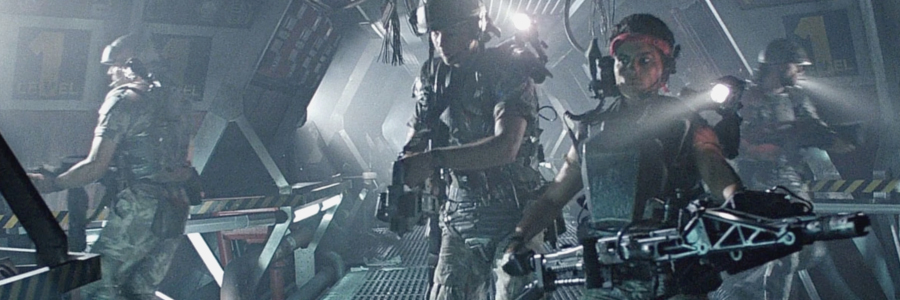
In Aliens (1986), tension is palpable as the Colonial Marines advance methodically, carefully through the corridors of Hadley’s Hope, the terraforming facility on LV-426, checking room after room. They find and examine signs of the acid-bleeding aliens having been present, but encounter none. By design, the action moves slowly, deliberately, and suspense builds.
Meanwhile, the audience are on the edge of their seats, for they know what awaits the marines: sooner or later, the aliens will leap out. And when they do, the tempo shifts in an instant to fast and furious!
As with good sex, foreplay has built to a climax.
Stephen King spends two spine-tingling pages on young Danny just opening the door of Room 217 and stepping inside to find the dead woman in the bathtub, Koontz notes of The Shining (1977). And when she suddenly opens her eyes and reaches for him, the switch is thrown and the rest of that scene moves with lightning speed.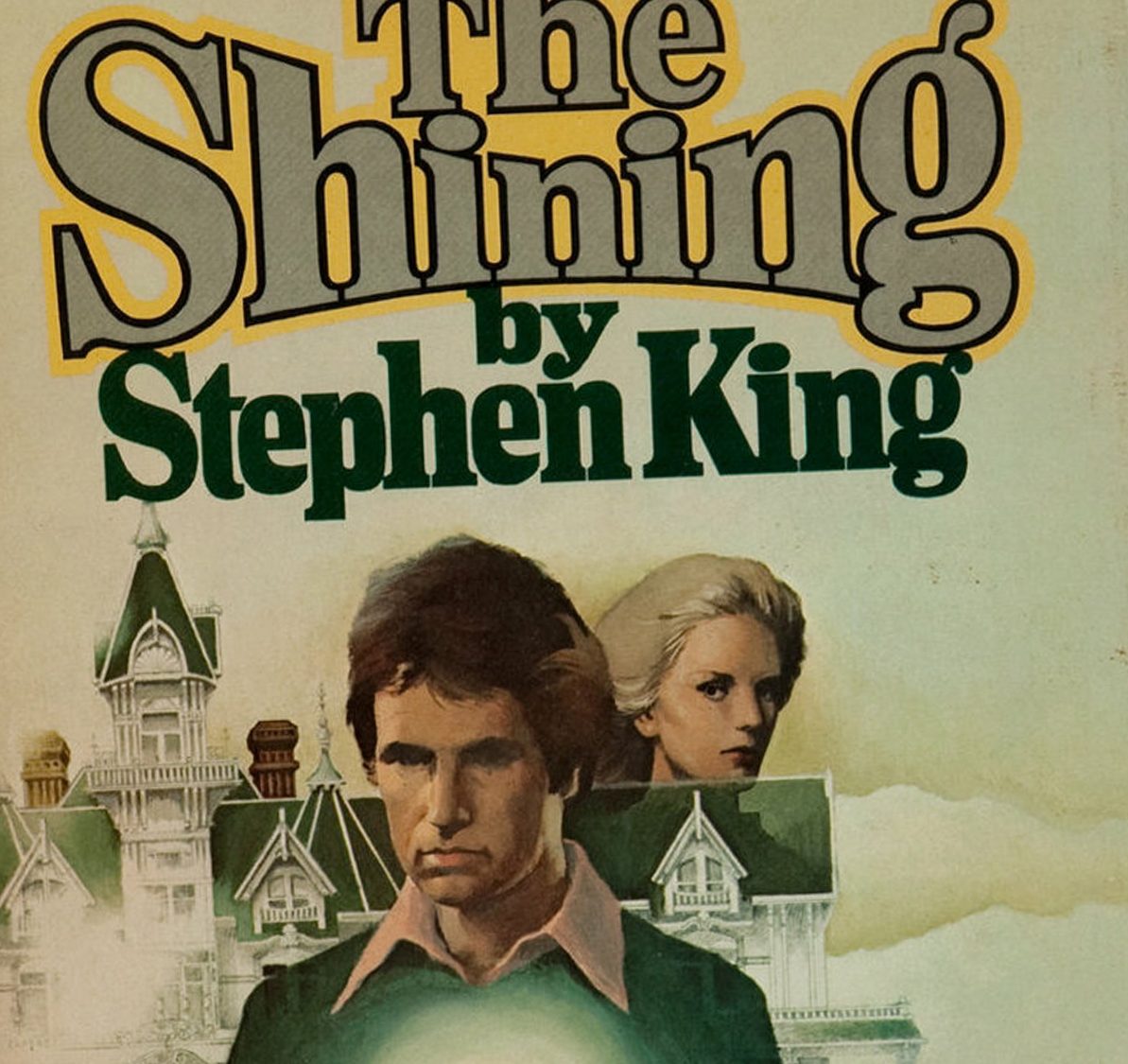
“The whole book is one delicious anticipation sequence,” he adds, “in that we know that, sooner or later, Jack Torrance is going to go after his son with an axe. Tension has built to an excruciating level when that climax finally comes.”
Other Horror specialists, however, argue that we need not necessarily meet the antagonist. In fact, counterintuitively perhaps, it’s rather more terrifying if we don’t, or if contact is but fleeting, shadowy.
To return to our Aliens example, while Ripley and the audience have faced a Xenomorph before, at this point, the marines have not and so the scene described above works well because she and the audience know more than do the characters advancing through the terraforming facility, and because they empathize with those characters and know that some of them are about to die.
But how much more terrifying were the skirmishes with this deadly creature in Alien (1979)—tight close-ups of teeth and claws, quick glimpses—was that a tentacle, or a tail?—the monster always partially hidden. The alien was nothing we could solidify in our minds. It was an unknown, and let’s not forget what Lovecraft had to say about fear of the unknown.
A full reveal, then, would in that moment, arguably, drop us down a rung on King’s ladder to the Horror level, still an effective scare, but not nearly as intense as the high-level Terror that ensues when our imaginations are left to do the heavy lifting.
Genre writer William F. Nolan (1928-2021) observed that nothing is so frightening as what’s behind the closed door. But when that door is thrown open and a ten-foot-tall creature is standing there in the doorway, we are apt to feel a little disappointed, oddly relieved, for we were thinking that the monster might be 100 feet tall!
Similarly, Charles L. Grant opined, “I prefer the threat of the razor to the blow of the bludgeon; I like shadows more than daylight.” To describe in graphic detail the results of an attack by a madman or monster is an “insult to the imagination.” Many singularly unimaginative directors of horror movies and writers of novels make this mistake. Reaction to such a scene is revulsion, not fear, not terror.
In the urban legend labeled “The Hook,” or the classic W. W. Jacobs short story “The Monkey’s Paw” (1902), or The Blair Witch Project (1999), we are not confronted with anything outright nasty, but our imagination conjures up far more of a scare than any prose or special effect ever could. The suggestion alone is enough to get our mind’s eye working. We are thinking about what monstrosity must have been skulking so very close, just outside the car, the door, or the tent.
Stylistic techniques used by writers to manufacture suspense—that essential ingredient—include using simpler words and shorter sentences as the narrative approaches a Moment of Violence, giving the reader an increasing sense of unstoppable, headlong forward motion.
Yet in his novel The Vision (1977), Koontz took the opposite approach. To convey the chaos and frenzy of the killer’s knife attack on the lead character, he wrote much of the encounter as one long, breathless sentence.
As mentioned regarding Setting, brief scene- and mood-establishing imagery, and character descriptions as the moment approaches may use words related to danger and death, subliminally suggesting to the reader that the protagonist is in peril, and might die—“the place was as quiet as a morgue,” or “the old man’s face was withered and as pale as a corpse,” or “her blood-red gown stood in marked contrast to the bleak, ashen surroundings.” You get the idea.
All of these crucial elements naturally intermingle and in the hands of a skilled Master of the Macabre, a Practitioner of the Petrifying, a Doctor of the Dreadful, a Sultan of the Scare—okay, we’re done—and are expertly blended just so in order to deliver the utmost in dark, creepy, bloodcurdling thrills and terror on both page and screen.
SOME FINAL ADVICE
We’ll close with a few words of advice for fan-fiction writers and aspiring horror novelists or screenwriters:
Author Robert Bloch (1917-1994), best known for Psycho (1959), counselled that a good horror writer must incorporate originality—of prime importance—and write in a length most effective. There’s no need for a trilogy when a novel will do, or for a novel when a short story suffices, or for a feature-length film when a half-hour TV episode does the job. And if a theme is shopworn, the twist or payoff should be fresh.
Charles L. Grant counselled, “Find your monster from that which scares you. And remember that the monster is far more frightening as a shadow, an unknown, than as a Thing.”
Finally, writer, editor, and critic Douglas E. Winter (born 1950) outlines ten standards of excellence in horror fiction that may serve as a useful guide for the next H. P. Lovecraft, Shirley Jackson, Ramsey Campbell, Rod Serling, Mike Flanagan, Anne Rice, or Stephen King about to dip his or her quill into the horror inkwell:
1) Originality—bring something new to the table, or explore a fresh angle on a classic theme.
2) Characterization—write sympathetic characters.
3) Reality—there is no effective horror without a contrasting reality. We must have the natural in order that we are made uneasy and frightened by the supernatural.
4) Mystery—it is not the job of the horror writer to answer all the questions. It’s not particularly frightening if everything is explained in some logical manner on the last page, effectively diluting the terror. Leave the reader with some mystery, something to wonder about, something to fear.
5) Bad Taste—the best horror fiction tests the boundaries of acceptable behaviour. The reader is forced to grapple with society’s taboos laid bare before him. But even the most abhorrent perversions can be forgiven if done with style.
6) Suggestion—the horrors are always more effective when suggested and left to the imagination than when explicitly presented, an approach often employed in horror cinema, unfortunately.
7) Subtext—great horror fiction provides all the shocks and scares of the carnival funhouse, but offers, as well, comment on the human condition, a lasting impression the reader takes with him/her beyond the last page. Stephen King’s Salem’s Lot imprints upon the classic vampire lore sociopolitical themes. Carrie, too, comments on the sometimes relentless cruelty of high school bullying.
8) Subversion—in, particularly, the conventional American movie context, swimming against the current comes with awful consequences—don’t talk to strangers, don’t party, don’t have casual sex with your boyfriend in the back of his car, don’t step outside the puritanical constricts of society, don’t be subversive or the bogeyman will get you. But perhaps conforming is the worst horror of all!
9) Monsters—the traditional monsters of the genre—vampires, werewolves, space aliens—are joined by the modern monsters of our world—disaffected youth, narcissists and psychopaths, child abusers, soulless corporations. In other words, us! A good monster, whether actual or allegorical, worldly or otherworldly, is essential.
10) Endgame—a good horror story requires a satisfying ending. The writer must awaken the reader from the nightmare and return him/her to the workaday world, but not without a good dose of lingering anxiety. This particular episode has concluded but is it really over? Will the monster be back? How long before the threat arises once more? Can we ever really be safe again?