
THE BACKWARD TAIL OF COMET 3I/ATLAS: Last month, when astronomers used the Hubble Space Telescope to photograph 3I/ATLAS, they had a “Eureka!” moment. The mysterious interstellar visitor had a fuzzy atmosphere and a growing tail. Clearly, it was a comet.
However, something was not quite right. Take a look, and see if you can spot the problem:
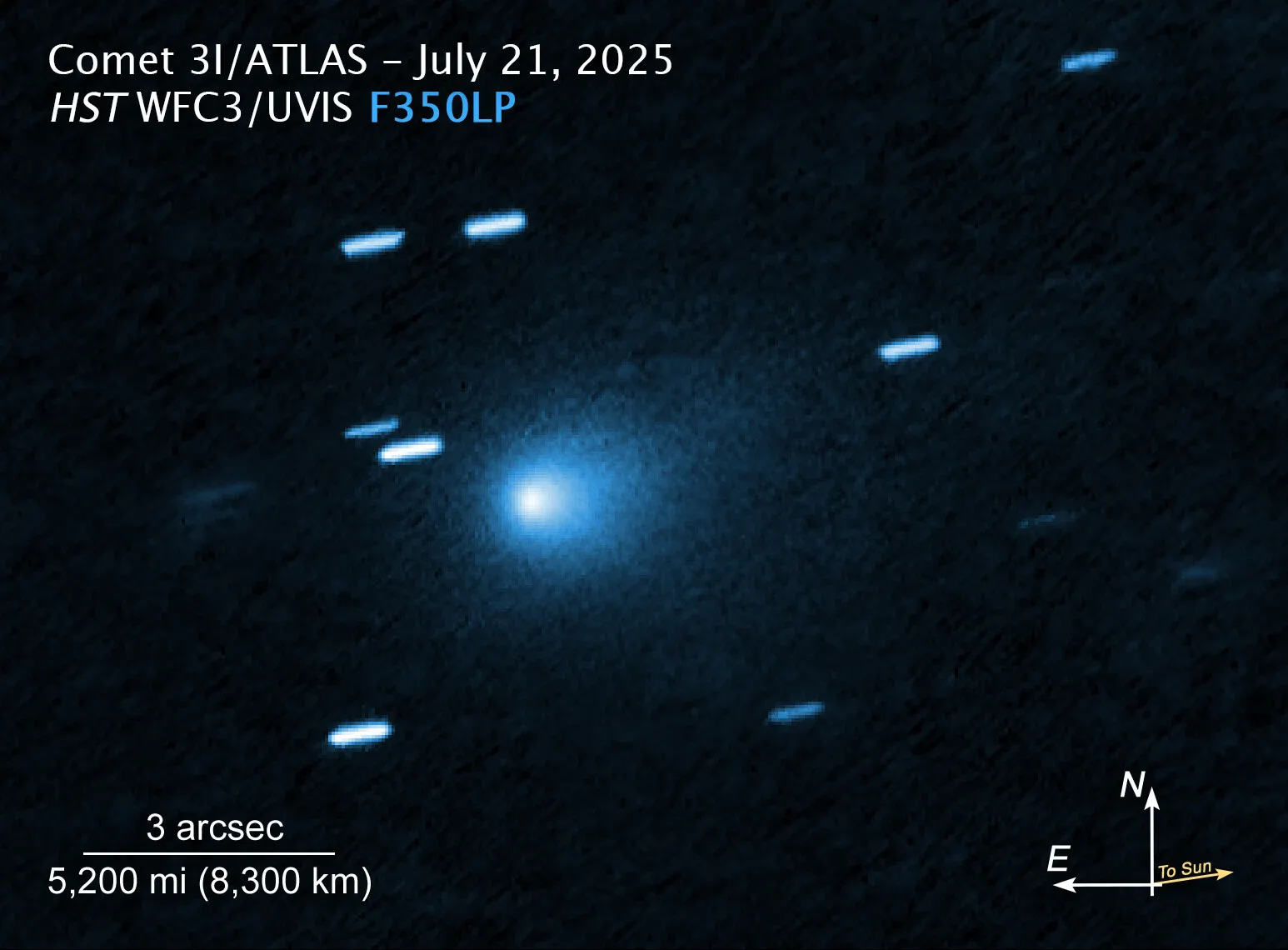
The tail of 3I/ATLAS points almost straight toward the sun. Normally, comet dust tails are pushed away from the sun by radiation pressure. 3I/ATLAS is doing the opposite—it’s backwards.
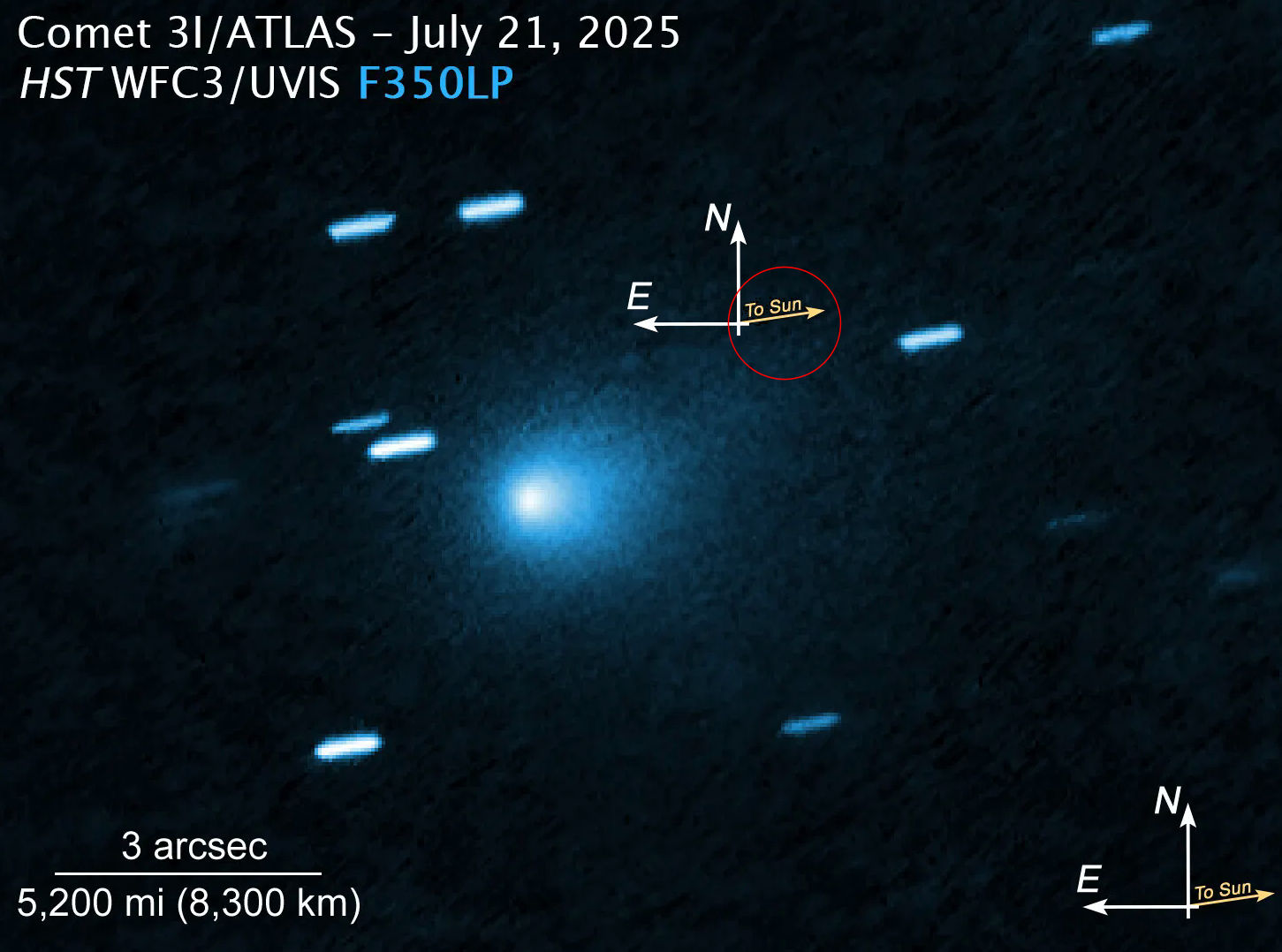
Why? Researchers led by David Jewitt of UCLA believe they have an explanation: “It is due to the preferential sublimation of ice on the hot day side of the nucleus and the near absence of sublimation on the night side,” they wrote in a paper reporting the observations.
In other words, 3I/ATLAS *is* a comet, but only the sun-heated side is producing lots of dust. The emerging dust particles are too big for radiation pressure to bend them back into an ordinary tail.
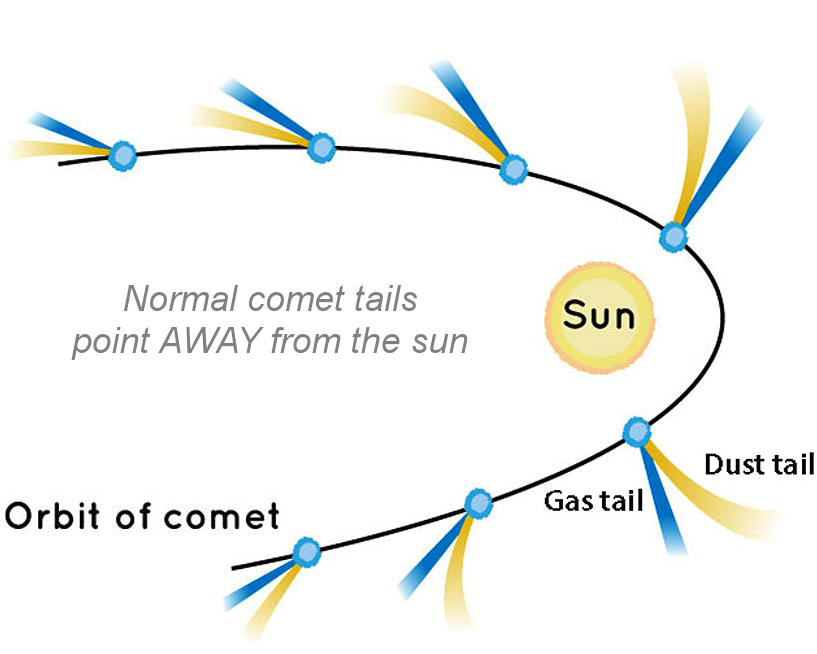 This is unusual, but not unheard of. Solar system comets have been known to produce sunward fans or jets, typically from localized “hot spots” on their rotating nuclei. What makes 3I/ATLAS different is the dominance of its sunward plume, dwarfing a barely visible anti-solar tail behind it.