
Here’s finally some good news! Astronomers and sky enthusiasts have been waiting a long time for the Vera Rubin to come on line. The resolution of this camera is such that it can see a golf ball on the moon! — CPL
First celestial image unveiled from revolutionary telescope
Ione Wells, South America correspondent
Georgina Rannard, Science correspondent
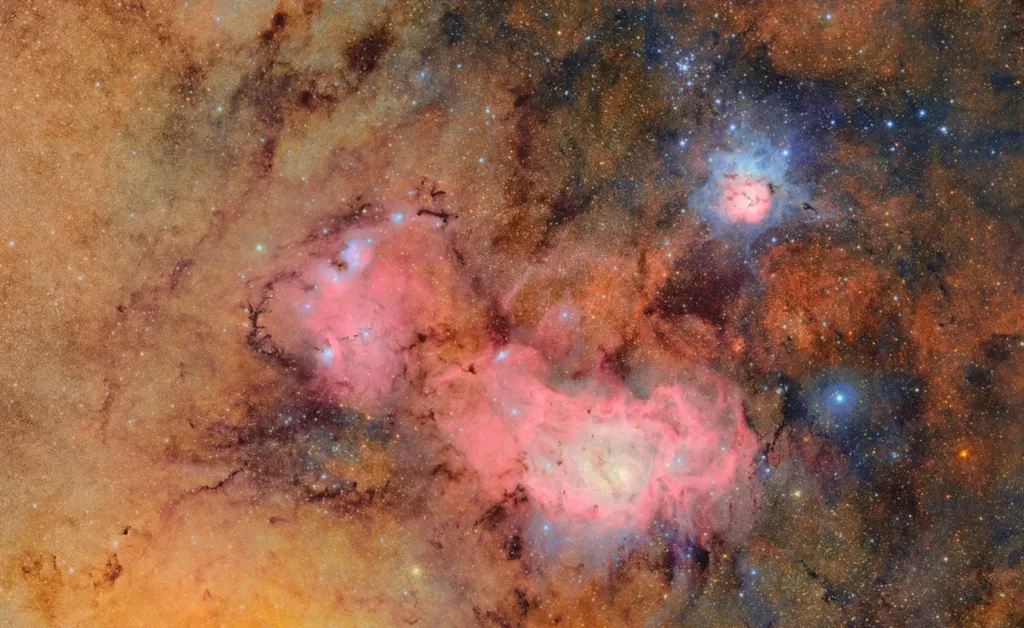
A powerful new telescope in Chile has released its first images, showing off its unprecedented ability to peer into the dark depths of the universe.
In one picture, vast colourful gas and dust clouds swirl in a star-forming region 9,000 light years from Earth.
The Vera C Rubin observatory, home to the world’s most powerful digital camera, promises to transform our understanding of the universe.
If a ninth planet exists in our solar system, scientists say this telescope would find it in its first year.
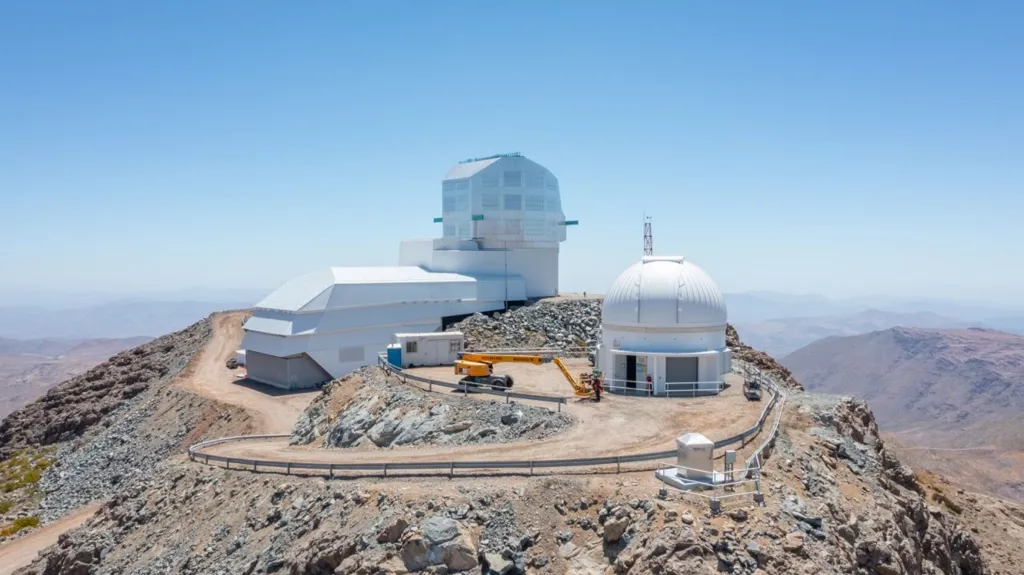
RubinObs Three large white buildings stand on top of a dry mountain in a desert. One has a domed roof. In the background the sky is blue and looks dry. A yellow crane is in front of the three white buildings which are the Vera Rubin observatory. A dusty road leads up to the buildings.RubinObs
Rubin Observatory and the Rubin Auxiliary Telescope in Cerro Pachón in Chile
It should detect killer asteroids in striking distance of Earth and map the Milky Way. It will also answer crucial questions about dark matter, the mysterious substance that makes up most of our universe.
In a press conference on Monday, the observatory revealed that in 10 hours, the telescope detected 2,104 new asteroids and 7 space objects close to Earth.
All other space and ground surveys combined usually find about 20,000 asteroids in a year.
This once-in-a-generation moment for astronomy is the start of a continuous 10-year filming of the southern night sky.