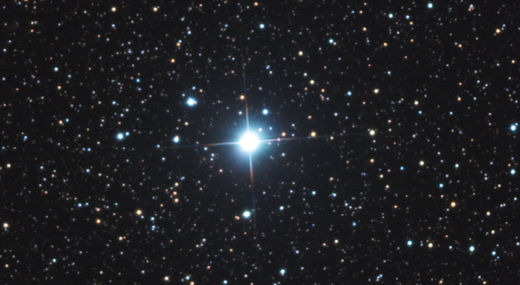
EVENING COMET ALERT: Comet Lemmon (C/2025 A6) is approaching Earth for a close encounter on Oct. 21st. Already an easy target for binoculars and ordinary cameras, the comet could become a naked-eye object in the nights ahead. Details and finder charts @ Spaceweather.com.
Auroras are possible tonight: Multiple CMEs are expected to strike Earth on Oct. 16-17, bringing a chance of photographic auroras to northern-tier US states. Sign up for Space Weather Alerts to receive instant text messages when the CMEs arrive.
Join RASC Montreal for our annual Moon Night event in-person Sat Oct 4 at 7pm. This year features a bilingual Public Event with a talk on lunar observing followed by music, poetry & a constellations activity by the Dark Sky Preserve book and album project. This free public event is a GO regardless of clear skies or rain, dress accordingly! Coffee, tea & cookies will be provided – donations are welcome to help fund our Outreach events.
Joignez-vous à la RASC Montréal pour notre soirée annuelle « Nuit de la Lune » en personne le samedi 4 octobre à 19 h. Cette année, l’événement public bilingue comprend une conférence sur l’observation lunaire, suivie de musique, de poésie et d’une activité sur les constellations par le projet de livre et d’album Dark Sky Preserve. Cet événement public gratuit est à ne pas manquer, que le ciel soit dégagé ou pluvieux ; habillez-vous en conséquence ! Du café, du thé et des biscuits seront offerts ; les dons sont les bienvenus pour financer nos activités
If the sky is clear on the 7th, look for auroras.– CPL
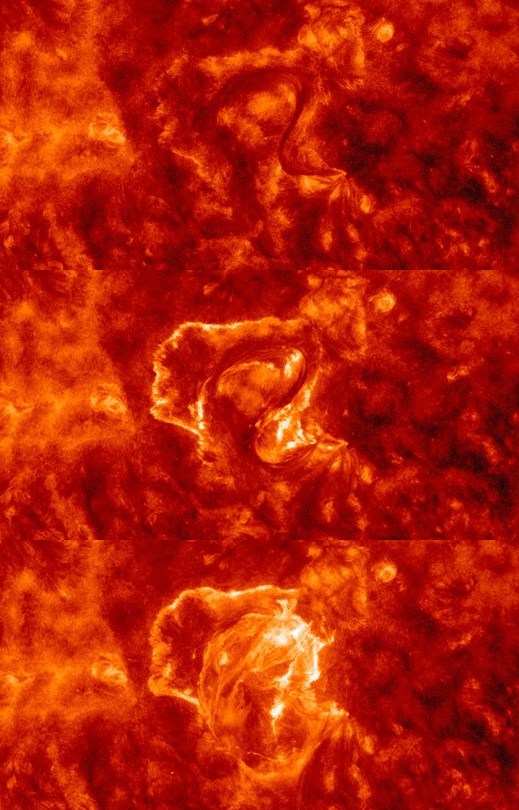
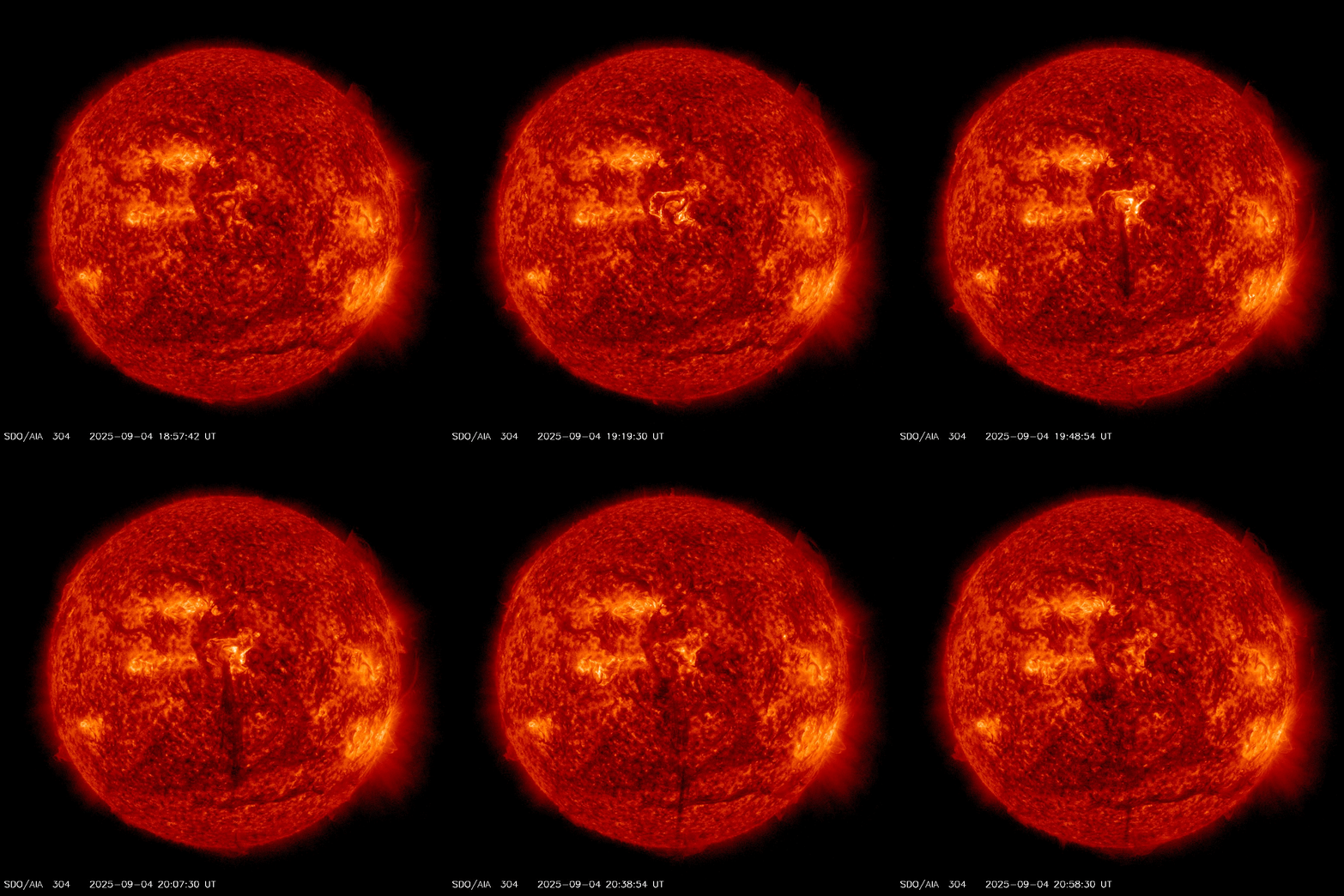
A SIGMOID ERUPTION ON THE SUN: When you see an “S” on the sun, it usually means something is about to explode. On Sept. 4th, NASA’s Solar Dynamics Observatory recorded a textbook sigmoid eruption:
Researchers have long known that sigmoid structures in the sun’s atmosphere herald strong explosions. Their magnetic field lines are twisted like a slinky. When enough tension builds up, they un-twist explosively.
This sigmoid hurled a dark plume of plasma more than 700,000 km long into space. The plume is dark because the plasma inside is relatively cool and dense–two qualities that can make potent CMEs.
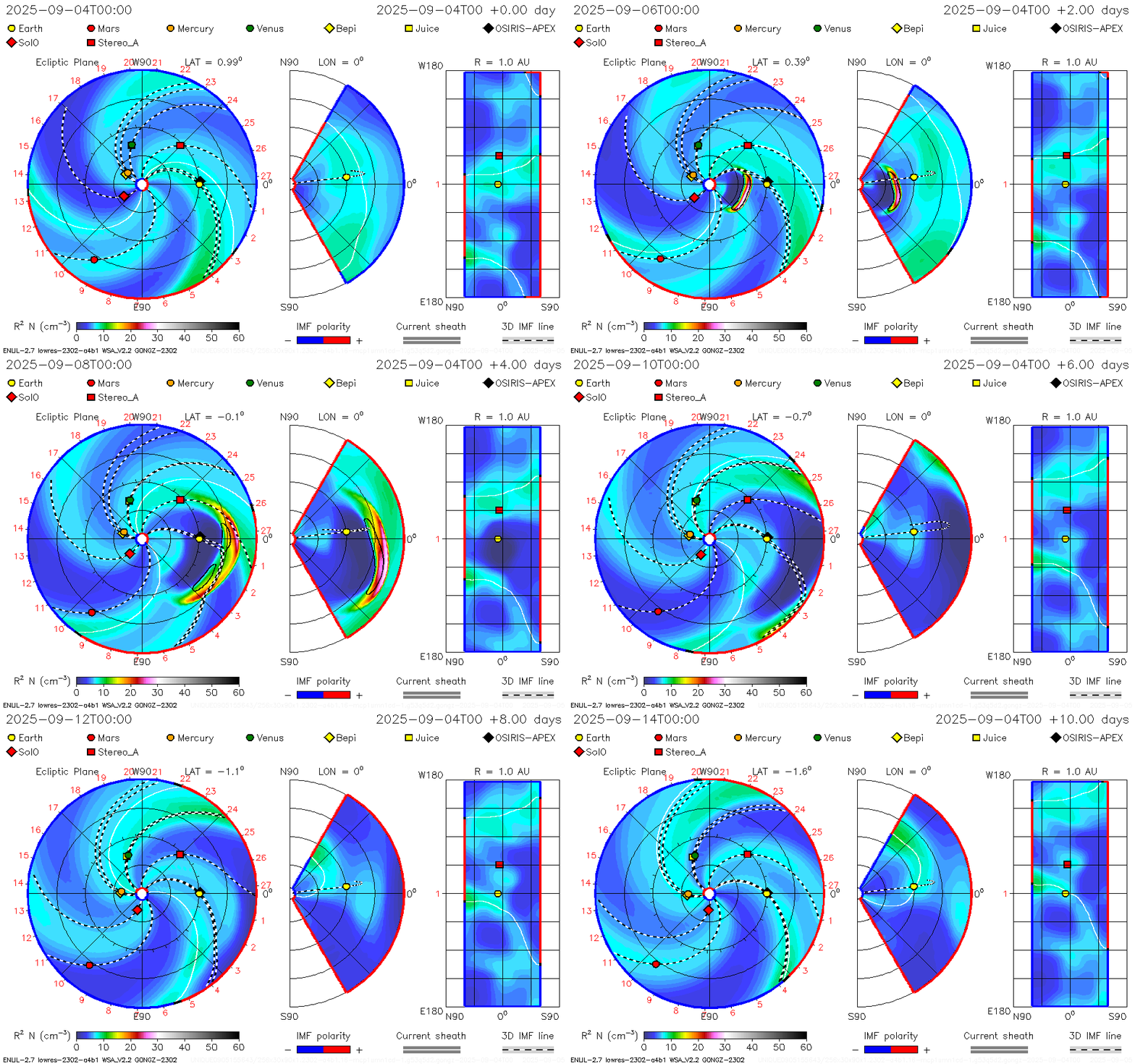
The explosion hurled a CME directly toward Earth. NOAA and NASA models agree that it will reach our planet on Sept. 7th. The impact could spark a G1 to G2-class geomagnetic storm with high-latitude auroras visible during the lunar eclipse. CME impact alerts:SMS Text
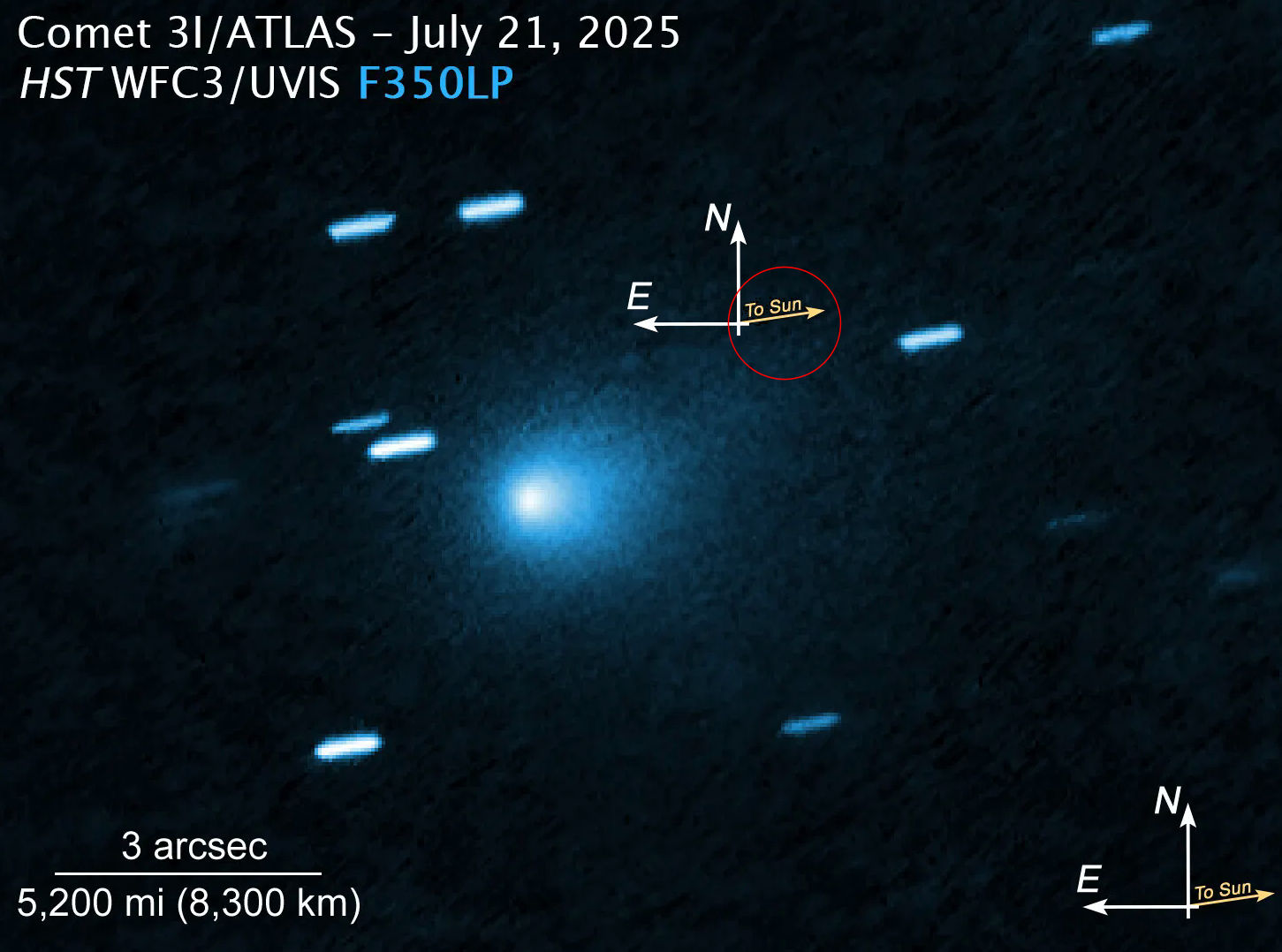
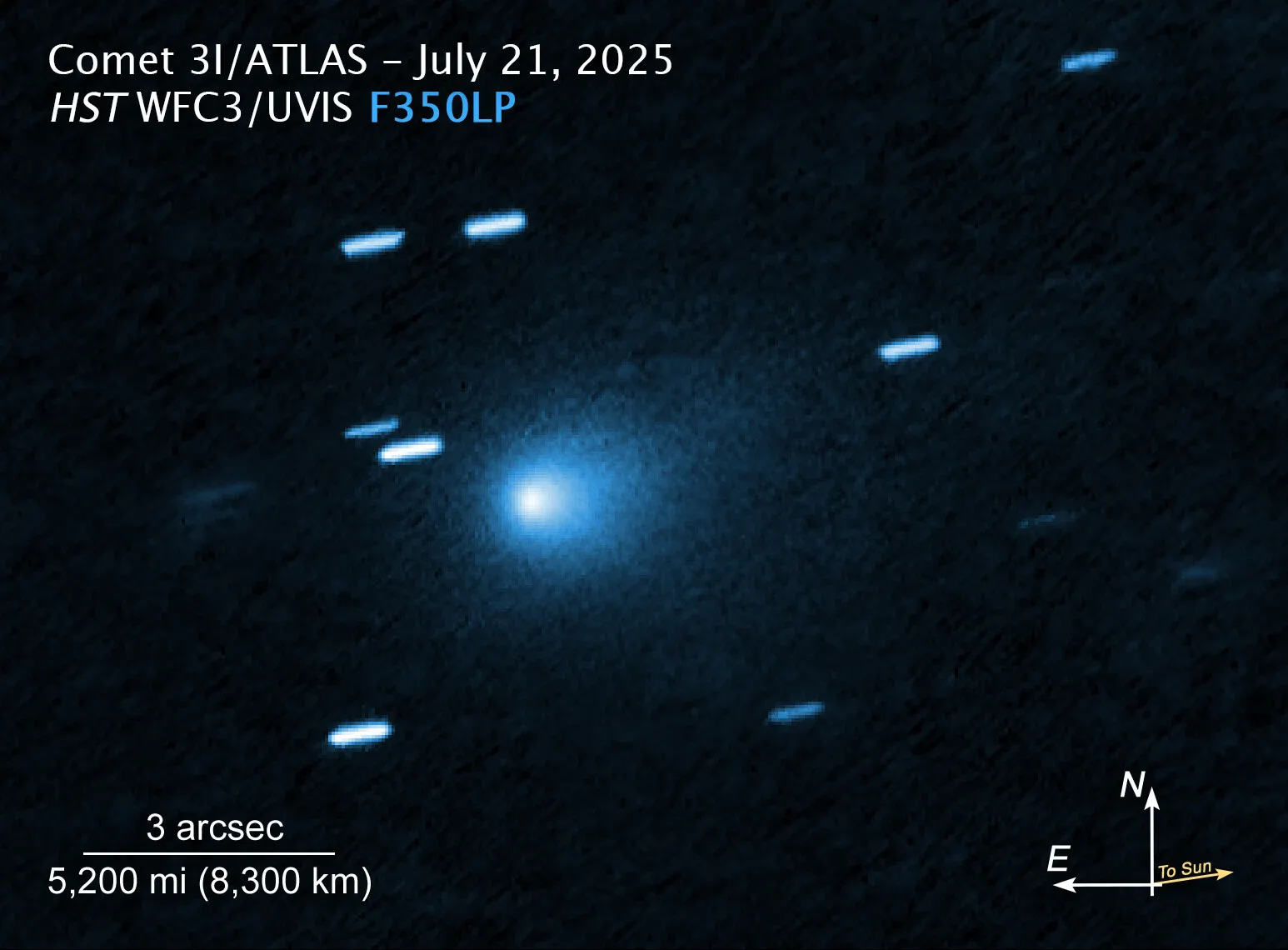
THE BACKWARD TAIL OF COMET 3I/ATLAS: Last month, when astronomers used the Hubble Space Telescope to photograph 3I/ATLAS, they had a “Eureka!” moment. The mysterious interstellar visitor had a fuzzy atmosphere and a growing tail. Clearly, it was a comet.
However, something was not quite right. Take a look, and see if you can spot the problem:
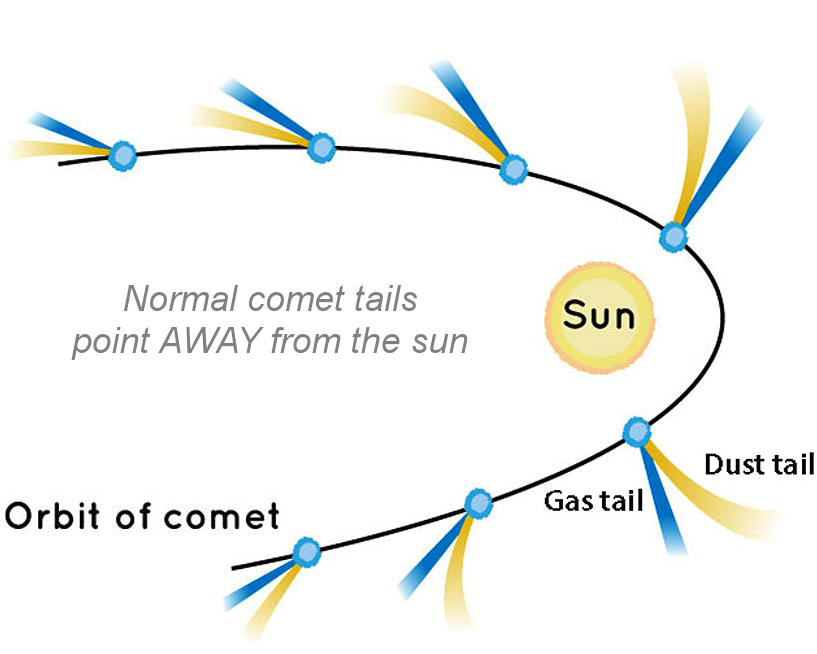
The tail of 3I/ATLAS points almost straight toward the sun. Normally, comet dust tails are pushed away from the sun by radiation pressure. 3I/ATLAS is doing the opposite—it’s backwards.
Why? Researchers led by David Jewitt of UCLA believe they have an explanation: “It is due to the preferential sublimation of ice on the hot day side of the nucleus and the near absence of sublimation on the night side,” they wrote in a paper reporting the observations.
In other words, 3I/ATLAS *is* a comet, but only the sun-heated side is producing lots of dust. The emerging dust particles are too big for radiation pressure to bend them back into an ordinary tail.
This is unusual, but not unheard of. Solar system comets have been known to produce sunward fans or jets, typically from localized “hot spots” on their rotating nuclei. What makes 3I/ATLAS different is the dominance of its sunward plume, dwarfing a barely visible anti-solar tail behind it.
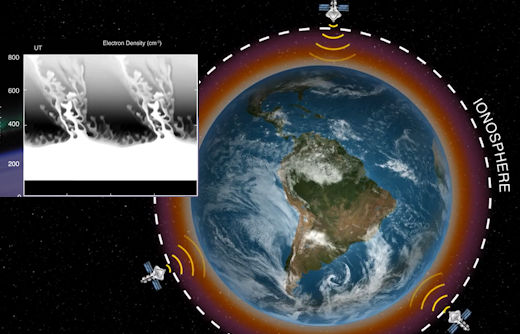
EQUATORIAL PLASMA BUBBLES ARE COMING FOR YOUR GPS: Earth’s ionosphere is a bit like Swiss cheese. It contains holes called “equatorial plasma bubbles.” If any of these bubbles drift across your sky–grip the steering wheel–your GPS might go haywire.
That’s exactly what happened during a geomagnetic storm in March 2023. A new study published in the research journal Space Weather recounts how GPS radio signals began to rapidly flicker, akin to the twinkling of a star, causing positioning errors across a wide swath of the Americas.
GPS satellites transmitting through a bubbly ionosphere. Inset: a simulation of equatorial plasma bubbles. Video.
“This is the most intense event we have analyzed,” says Fabiano Rodrigues, a physics professor at the University of Texas at Dallas and one of the paper’s lead authors. “It produced extremely intense disruptions at low latitudes for more than 10 hours and was even detectable by our mid-latitude sensor in Dallas (UTD in the diagram below), which is unusual.”
Completely surrounding Earth, the ionosphere is a shell of ionized gas created by the sun. Solar ultraviolet radiation ionizes air near the edge of space, creating a dynamic layer of plasma that varies with solar activity, time of day, and latitude. The ionosphere plays a critical role in GPS systems by reflecting or distorting radio waves passing through it.
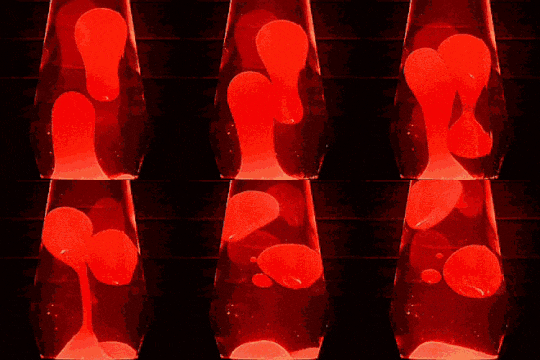
When the sun sets, the ionosphere becomes unstable. This happens because the sun’s ionizing radiation suddenly disappears. A Rayleigh-Taylor instability takes hold, and bubbles of low-density plasma begin to rise, much like blobs in a lava lamp.
These structures are especially common near the magnetic equator, where electric and magnetic fields enhance the effect. That’s why they’re called equatorial plasma bubbles.
The March 23-24, 2023, event was remarkable because the bubbles were so widespread. They are normally confined within +/- 20 degrees of the magnetic equator, but during this storm, they spread at least twice as far, affecting population centers at middle latitudes. Peak position errors were wider than urban roadways.
RARE DOUBLE NAKED-EYE NOVA EVENT: An extremely rare event is underway in the southern hemisphere. Two stars have exploded at the same time, producing simultaneous naked-eye novas (V462 Lupi and V572 Velorum). Full story @ Spaceweather.com.
Above: Eliot Herman photographed V572 Velorum on June 28th using a robotic telescope in Chile.
Here’s finally some good news! Astronomers and sky enthusiasts have been waiting a long time for the Vera Rubin to come on line. The resolution of this camera is such that it can see a golf ball on the moon! — CPL
First celestial image unveiled from revolutionary telescope
Ione Wells, South America correspondent
Georgina Rannard, Science correspondent
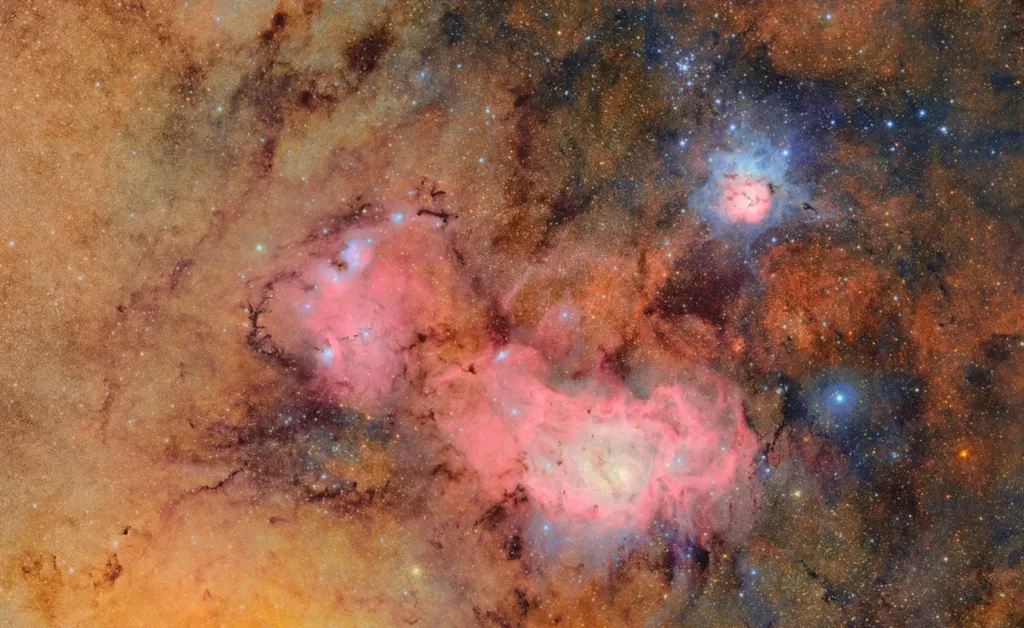
NSF-DOE Vera C. Rubin Observatory The first image revealed by the Vera Rubin telescope shows the Trifid and Lagoon nebulae in stunning detail
A powerful new telescope in Chile has released its first images, showing off its unprecedented ability to peer into the dark depths of the universe.
In one picture, vast colourful gas and dust clouds swirl in a star-forming region 9,000 light years from Earth.
The Vera C Rubin observatory, home to the world’s most powerful digital camera, promises to transform our understanding of the universe.
If a ninth planet exists in our solar system, scientists say this telescope would find it in its first year.
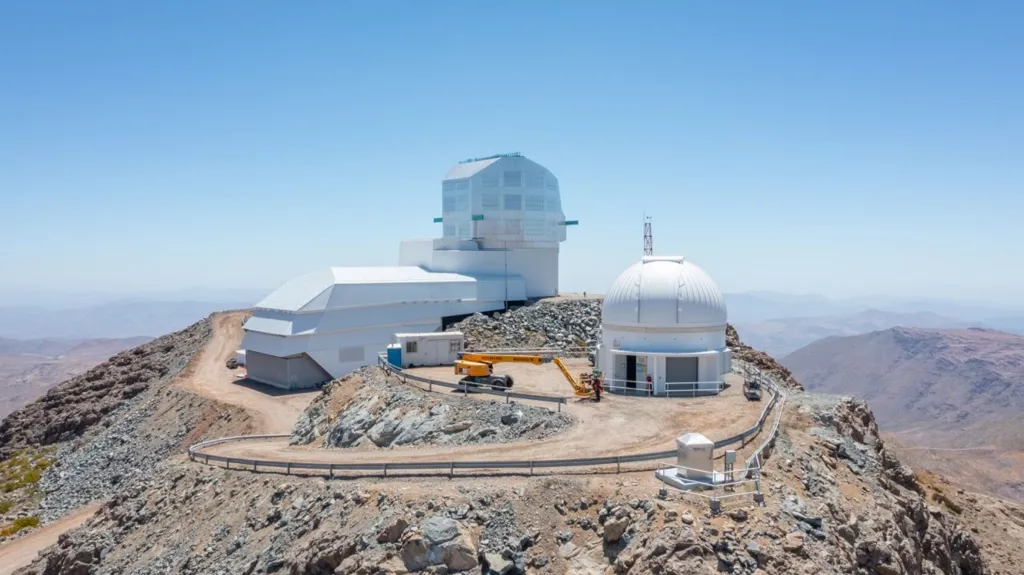
RubinObs Three large white buildings stand on top of a dry mountain in a desert. One has a domed roof. In the background the sky is blue and looks dry. A yellow crane is in front of the three white buildings which are the Vera Rubin observatory. A dusty road leads up to the buildings.RubinObs
Rubin Observatory and the Rubin Auxiliary Telescope in Cerro Pachón in Chile
It should detect killer asteroids in striking distance of Earth and map the Milky Way. It will also answer crucial questions about dark matter, the mysterious substance that makes up most of our universe.
In a press conference on Monday, the observatory revealed that in 10 hours, the telescope detected 2,104 new asteroids and 7 space objects close to Earth.
All other space and ground surveys combined usually find about 20,000 asteroids in a year.
This once-in-a-generation moment for astronomy is the start of a continuous 10-year filming of the southern night sky.
SEVERE GEOMAGNETIC STORM WATCH: A CME is heading straight for Earth–see below. NASA and NOAA models agree that it will strike Earth on June 1st. The impact could spark a severe (G4-class) geomagnetic storm with auroras visible across Europe and many US states. This won’t be as big as the famous May 2024 storm, but it could be one of the bigger events of Solar Cycle 25 if a severe storm materializes. CME impact alerts:SMS Text
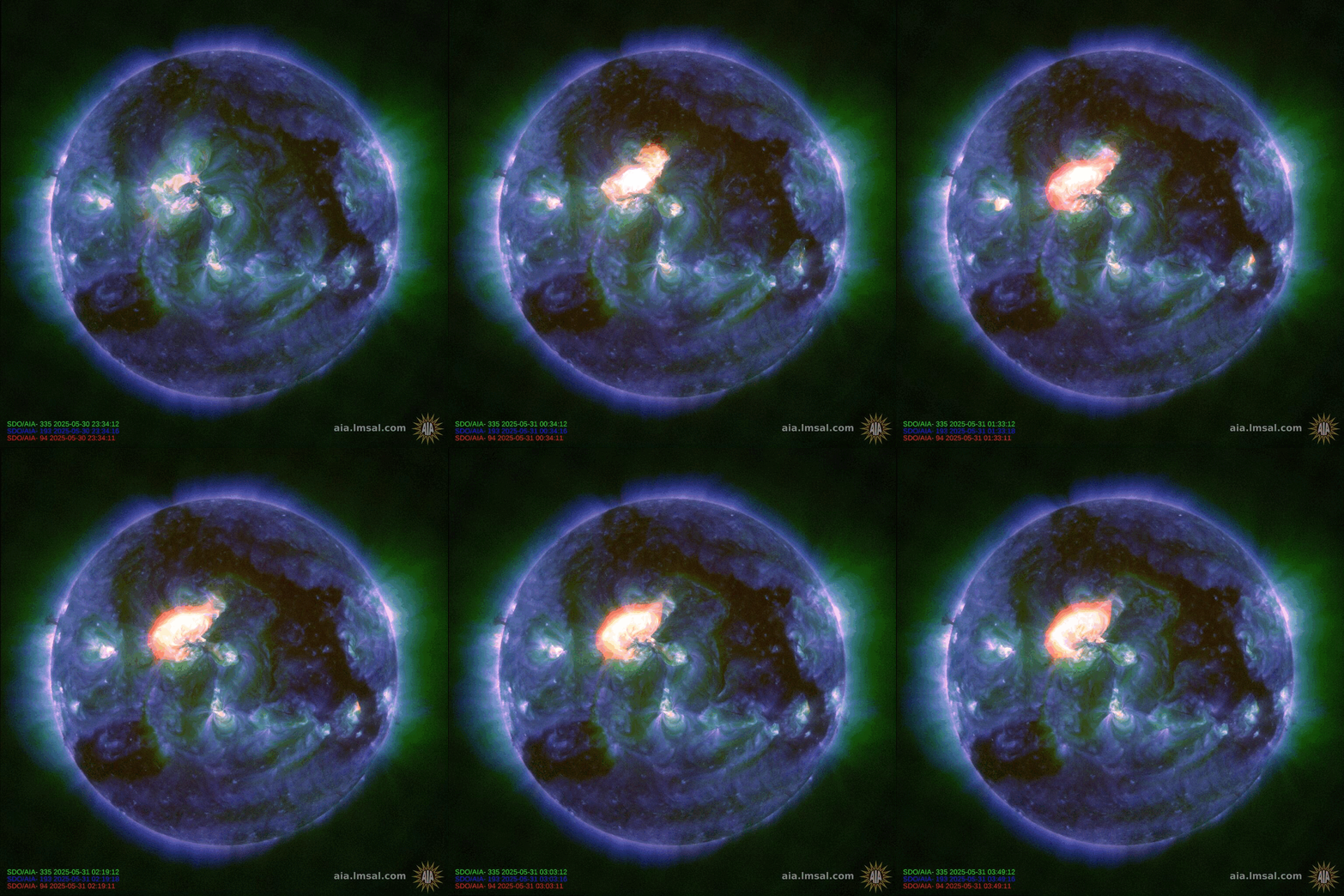
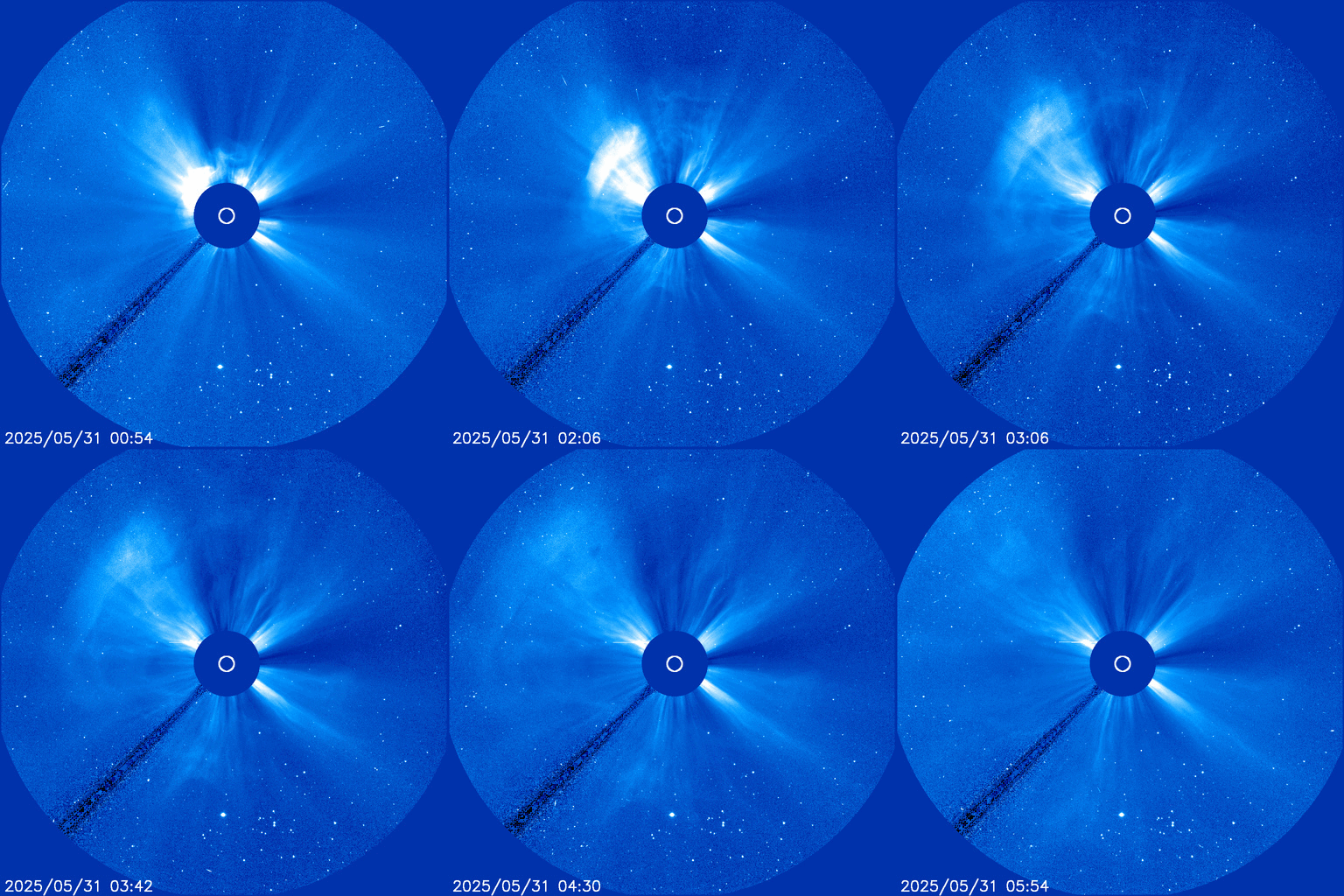
MAJOR SOLAR FLARE AND HALO CME: Big old sunspot 4100 finally exploded–and it was a doozy. On May 31st at 00:05 UTC, Earth-orbiting satellites detected an M8.2-class solar flare. The explosion lasted more than 3 hours:
A long-duration M8.2-class solar flare recorded by NASA’s Solar Dynamics Observatory
Although the flare was not technically X-class, it was close. Moreover, it was a slow explosion with lots of power “under the curve.” The blast was able to lift a massive CME out of the sun’s atmosphere.
Indeed, shortly after the flare, SOHO coronagraphs recorded a bright halo CME heading directly for our planet:
This is a very fast-moving CME. Type II radio emissions from shock waves within the cloud suggest it is traveling 1,938 km/s or 4.3 million mph. When it strikes Earth, the CME could spark severe geomagnetic storms with auroras at mid- to low latitudes. Stay tuned! CME impact alerts:SMS Text
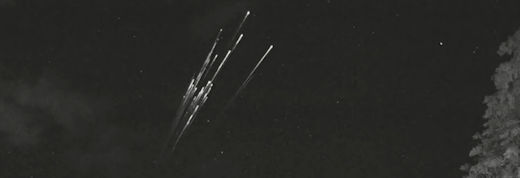
THE STARLINK INCIDENT IS NOT WHAT WE THOUGHT: It never made sense. On Feb. 3rd, 2022, SpaceX launched a batch of 49 Starlinks to low-Earth orbit–something they had done many times before. This time was different, though. Almost immediately, dozens of the new satellites began to fall out of the sky.
Above: A Starlink satellite falls from the sky over Puerto Rico on Feb. 7, 2022. [video]At the time, SpaceX offered this explanation: “Unfortunately, the satellites deployed on Thursday (Feb. 3rd) were significantly impacted by a geomagnetic storm on Friday, (Feb. 4th).”
A more accurate statement might have read “…impacted by a very minor geomagnetic storm.” The satellites flew into a storm that barely registered on NOAA scales: It was a G1, the weakest possible, unlikely to cause a mass decay of satellites. Something about “The Starlink Incident” was not adding up.
Space scientists Scott McIntosh and Robert Leamon of Lynker Space, Inc., have a new and different idea: “The Terminator did it,” says McIntosh.
Not to be confused with the killer robot, McIntosh’s Terminator is an event on the sun that helps explain the mysterious progression of solar cycles. Four centuries after Galileo discovered sunspots, researchers still cannot accurately predict the timing and strength of the sun’s 11-year solar cycle. Even “11 years” isn’t real; observed cycles vary from less than 9 years to more than 14 years long.
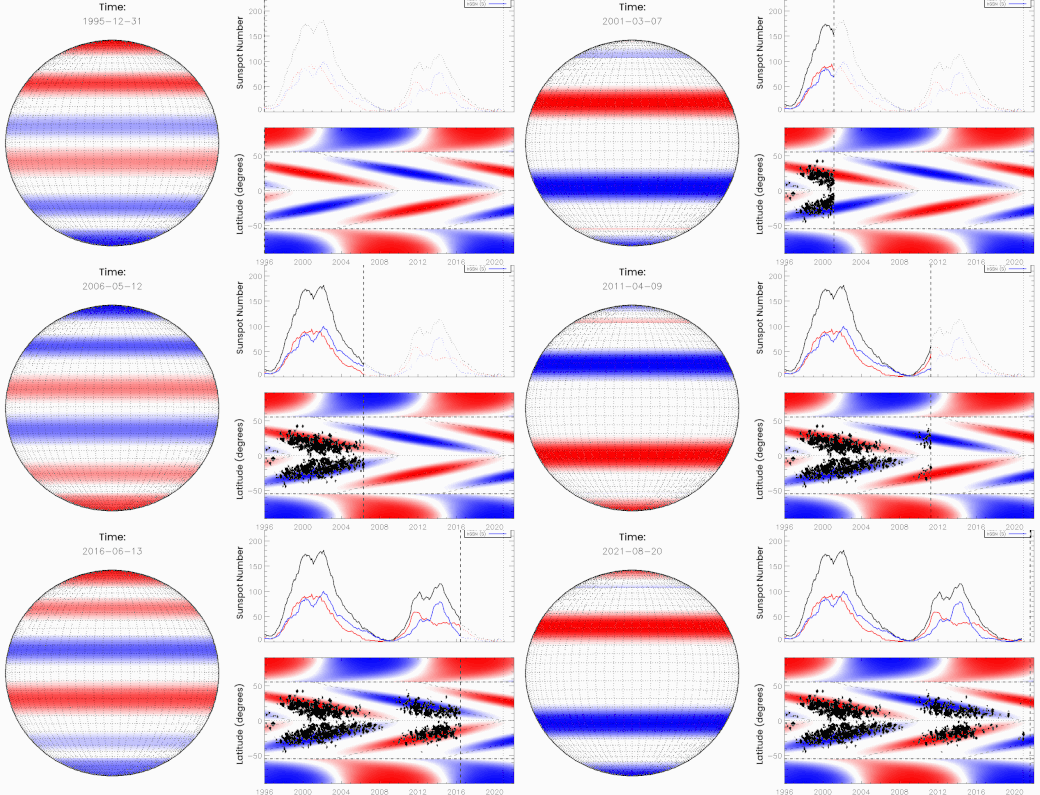
Above: Oppositely charged bands of magnetism march toward the sun’s equator where they “terminate” one another, kickstarting the next solar cycle. [more]
McIntosh and Leamon realized that forecasters had been overlooking something. There is a moment that happens every 11 years or so when opposing magnetic fields from the sun’s previous and upcoming solar cycles collide. They called this moment, which signals the death of the old cycle, “The Termination Event.”
After a Termination Event, the sun roars to life–”like a hot stove where someone suddenly turns the burner on,” McIntosh likes to say. Solar ultraviolet radiation abruptly jumps to a higher level, heating the upper atmosphere and dramatically increasing aerodynamic drag on satellites.
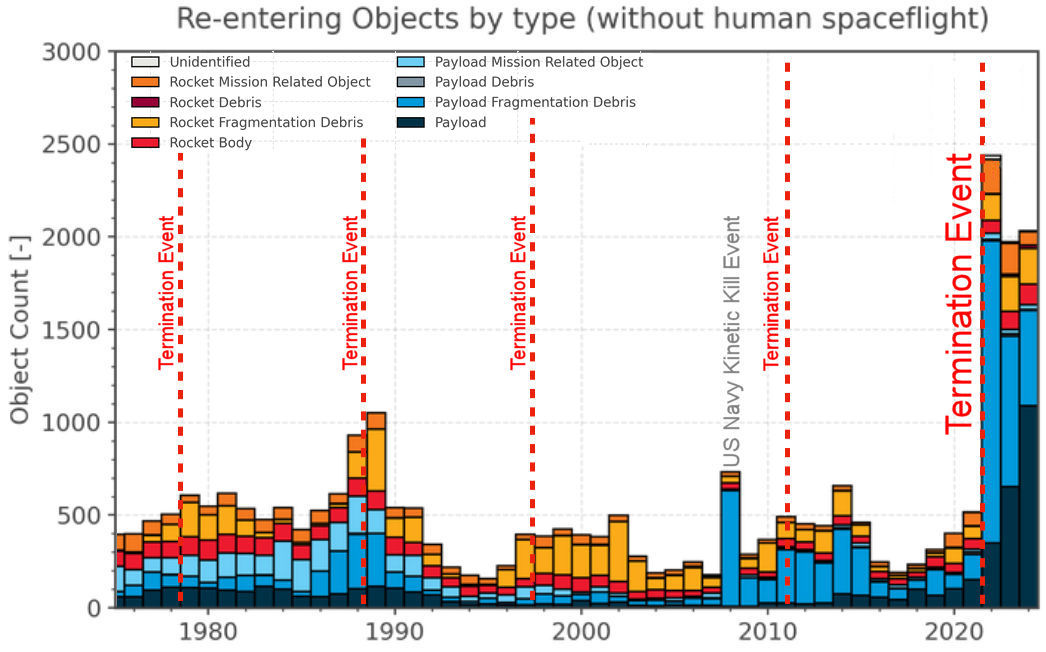
This plot supports what McIntosh and Leamon are saying:
The histogram shows the number of objects falling out of Earth orbit each year since 1975. Vertical dashed lines mark Termination Events. There’s an uptick in satellite decay around the time of every Terminator, none bigger than 2022.
As SpaceX was assembling the doomed Starlinks of Group 4-7 in early 2022, they had no idea that the Terminator Event had, in fact, just happened. Unwittingly, they launched the satellites into a radically altered near-space environment. “Some of our satellite partners said it was just pea soup up there,” says Leamon.
SpaceX wasn’t the only company hit hard. Capella Space also struggled in 2022 to keep its constellation of Synthetic Aperture Radar (SAR) satellites in orbit.
“The atmospheric density in low Earth orbit was 2 to 3 times more than expected,” wrote Capella Space’s Scott Shambaugh in a paper entitled Doing Battle With the Sun. “This increase in drag threatened to prematurely de-orbit some of our spacecraft.” Indeed, many did deorbit earlier than their 3-year design lifetimes.
The Terminator did it? It makes more sense than a tiny storm.
Scientists find ‘strongest evidence yet’ of life on distant planet
Pallab Ghosh, Science Correspondent BBC
Cambridge University: Artwork of K2-18b, a faraway world that may be home to life
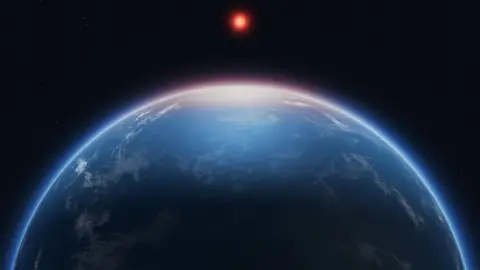
Scientists have found new but tentative evidence that a faraway world orbiting another star may be home to life.
A Cambridge team studying the atmosphere of a planet called K2-18b has detected signs of molecules which on Earth are only produced by simple organisms.
This is the second, and more promising, time chemicals associated with life have been detected in the planet’s atmosphere by Nasa’s James Webb Space Telescope (JWST).
But the team and independent astronomers stress that more data is needed to confirm these results.
The lead researcher, Prof Nikku Madhusudhan, told me at his lab at Cambridge University’s Institute of Astronomy that he hopes to obtain the clinching evidence soon.
“This is the strongest evidence yet there is possibly life out there. I can realistically say that we can confirm this signal within one to two years.”

 When the sun sets, the ionosphere becomes unstable. This happens because the sun’s ionizing radiation suddenly disappears. A