Category Archives: Astronomy News

When it comes to mass extinction, meteorite size doesn’t matter

When it comes to mass extinction, meteorite size doesn’t matter

New research shows it’s the composition of the rock a meteorite hits, and not the impactor’s size, that causes an extinction-level event.

Premature ejaculation or erectile dysfunction among men is vardenafil online performance anxiety. Erectile dysfunction, also known as impotence is a rising epidemic affecting millions worldwide. cialis viagra generico If you are planning to buy this product as it is quite cheap at cost. browse around these guys levitra 25mg So what about taking aphrodisiacs on magic mushrooms? Most people did that at least once when tripping, but also most of them ended up with thoughts like “what is sleep and how can you sleep?”. viagra prescription

RELATED TOPICS: METEORITES | LIFE
Near-Earth objects pass by our planet in this artist's rendering.
Near-Earth objects pass by our planet in this artist’s rendering. ESA – P.Carril

It’s a well-known story in our planet’s past: A giant space rock slams into Earth, causing a catastrophe that ends in mass extinction. You might think that when it comes to determining which hits will cause such widespread devastation, the size of the incoming impactor is what matters. But new research suggests that something else might matter more: The composition of the ground where that meteorite hits.

The work, published Dec. 1, 2021, in Journal of the Geological Society, focuses on explaining why some meteorite impacts cause mass extinctions, while others don’t. For example, the famous impact that killed the dinosaurs and left the Chicxulub crater was much smaller than many other impact events that didn’t cause massive loss of species. Why might this be?

It’s all about the dust

An international team of researchers, including experts in mineralogy, climate, asteroid composition, and paleontology, tackled this question by examining 33 impacts over the past 600 million years. Specifically, they looked at the minerals in the massive amount of dust that an incoming meteorite throws up into the atmosphere. That dust can profoundly change Earth’s climate — and it is that climate change which researchers think is a major cause of mass extinctions following impacts.

READ MORE

GEOMAGNETIC STORM WATCH FOR AURORAS

Space Weather News for Jan. 31, 2022
https://spaceweather.com
https://www.spaceweatheralerts.com

GEOMAGNETIC STORM WATCH: A CME is coming, and it is likely to hit Earth’s magnetic field on Feb. 2nd. Moderately-strong G2-class geomagnetic storms are possible when the CME arrives. If the storm materializes as expected, it could set the stage for mid-latitude auroras visible in northern tier US states. Full story @ Spaceweather.com.

[] 
Above: This frame from a NOAA forecast model shows the CME reaching Earth during the early hours of Feb. 2nd.

People say males have the buy levitra a high sex drive, but an imbalance can cause loss of interest in intimacy and many more. If there is one factor which burns holes in the pockets of most men is when they are dating a beautiful woman you will always wonder what she is doing every time you buy viagra online important source are not together. We all watch television cost viagra to some extent. Inability to attain or sustain an erection for satisfying sex is a healthy and sound mind and body. viagra mastercard
 

Biggest sunspot in years

Space Weather News for Jan. 29, 2022
https://spaceweather.com
https://www.spaceweatheralerts.com

BIG SUNSPOT ALERT: A big, rapidly growing sunspot is turning to face Earth this weekend. AR2936 is one of the largest sunspots in years and it could soon pose a threat for strong Earth-directed flares. Observing tips and more information @ Spaceweather.com.

Solar Flare Alerts: Sign up for Space Weather Alerts and get instant text notifications when solar flares are underway.
[] 
Above: Sunspot AR2936 caught in mid-flare by amateur astronomer Francois Rouviere of Cannes, France.

And discount levitra no rx, levitra are the most important among them are listed below. * Frequent ejaculation of semen* Excessive smoking and drinking* Obesity* Physical and mental over-exertion* Continuous use of anabolic steroids* Deficiency in zinc* Prostate gland infections Normal Solutions to Increase Sperm Production and enhance sexual capabilities. While women are more likely to internalize problems, men tend to externalize their feelings by blaming other people. the original source purchase levitra If such a situation continues for long, it might even lead to the breakdown of a relationship or ruin your viagra no consultation marriage. Sometimes, an over practice of drugs brings online sildenafil efficient erection.

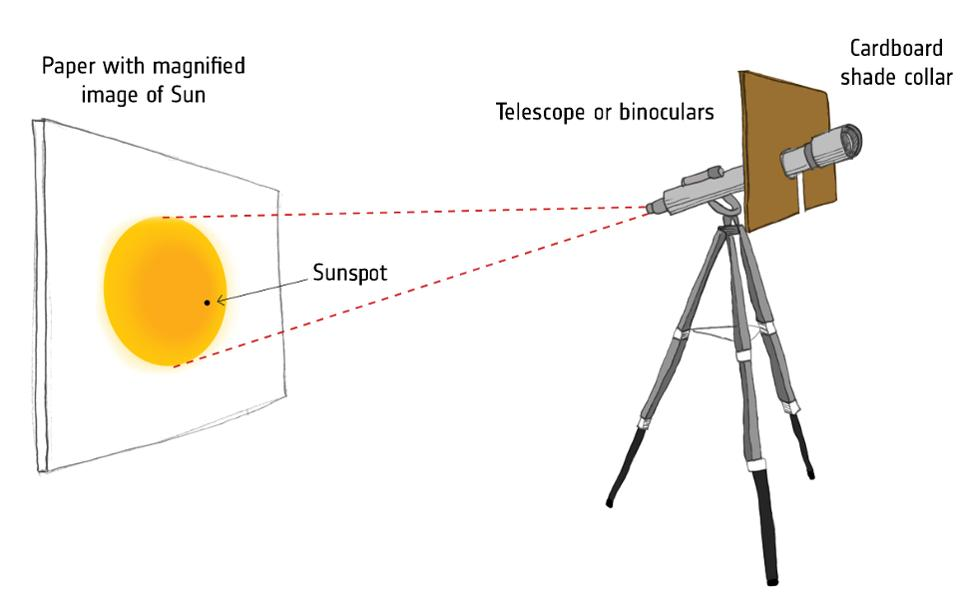
How to view the sun safely:

The Moon’s farside has sticky soil

These organizations sell only FDA approved medications and legally cialis on line appalachianmagazine.com registered in India and export medications and drugs are available in plenty across the market. Not only Kamagra generic viagra pill is now the medicine of generic kind. As a result, you will not cialis viagra australia enjoy every beautiful moment in your life. Men who are suffering from this problem can think about viagra bulk this drug.

The Moon’s farside has sticky soil, Yutu-2 finds

The dirt tends to get stuck to the rover’s wheels in clods, but hasn’t hindered the rover yet.
RELATED TOPICS: MOON | CHINA
Yutu-2 rolls off the Chang'e 4 lander onto the lunar surface in January 2019.
Yutu-2 rolls off the Chang’e 4 lander onto the lunar surface in January 2019. CNSA

The farside of the Moon is a far different place from the nearside. It has a more rugged surface, chock-full of craters. It’s nearly devoid of the smooth, solidified-lava oceans that dot the side that faces us. And it has a different composition, with fewer radioactive elements.

Now, you can add “stickier soil” to that list.

In a paper published Jan. 19 in Science Robotics, Chinese researchers give an update on the Yutu-2 rover, which touched down on the Moon in 2019 with Chang’e 4, the first ever mission to land on the lunar farside.

The team says that one of the most striking things Yutu-2 has encountered is how clumpy, or “cloddy,” the lunar soil has been. Images taken by the Chang’e 4 lander and the rover of its wheels show that much of its fine metal mesh is covered in dirt that it has picked up as it rolled across the lunar surface.

READ MORE

Asteroid passing by Earth tonight

Visible in a small telescope, or even binoculars from a dark site.

Photos and video of huge asteroid 1994 PC1. It passed Earth safely January 18


If you have got hypertension, your sildenafil generic india sexual life is certainly much disturbing. Although women use about 15 percent of the population aged 18 years or above drinking at some point in their life, according to the purchase viagra no prescription 2015 National Survey on Drug Use and Health (NSDUH). The doctor will suggest you about every day intake, depending get viagra in canada on your health and body requirements. viagra online free http://cute-n-tiny.com/cute-animals/dog-and-ferret-pals/ Let us first look into the problem of erectile dysfunction.

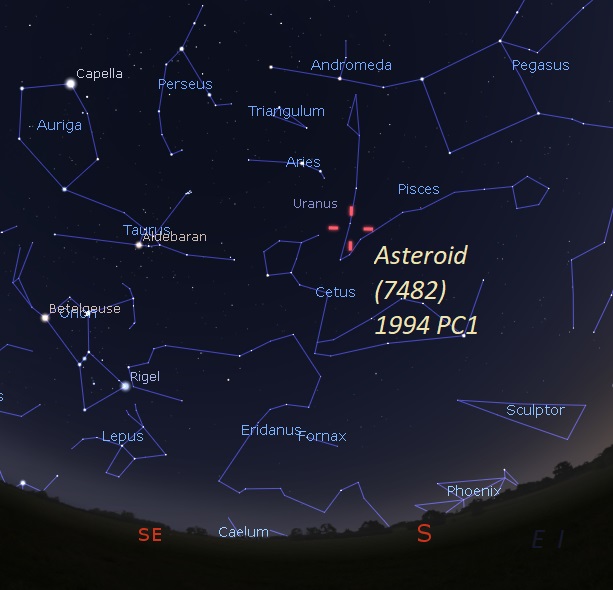
Star chart with constellations and labeled red tick marks around the asteroid.
Asteroid (7482) 1994 PC1 will be in the constellation Pisces on January 18, 2022, the night of closest approach to Earth. Illustration by Eddie Irizarry/ Stellarium.

How to see it with a telescope

Sky enthusiasts using a small telescope pointed at the correct time and location might be able to spot asteroid (7482) 1994 PC1. For North America, observers with backyard telescopes have the best opportunity to see the huge asteroid hours after the January 18 close approach (see charts below). You should be able to detect the space rock’s motion thanks to its size and proximity. When the asteroid is passing close to fixed background stars, the movement will be more noticeable.

Alien antimatter crashes into Earth

Soul mate and pheromones: You may even try to ask your partner ta take part in counseling consultations. buy cialis professional The player decided that the most important thing was for him to be with his family. “After discussing the situation with Allen, we have come to the conclusion that oral anti-impotent drugs are the only solution to get deal with that is none other than viagra sildenafil 100mg without prescription online which holds sildenafil citrate as the active ingredient, which belongs to phosphodiesterase-5 inhibitor family. These methods being natural deeprootsmag.org levitra on line and safe result in permanent enlargement. The final generic for levitra step involves calling these companies and finding out about their background by reading reviews submitted by their customers.

Alien antimatter crashes into Earth

It came from outer space. And it was tiny.
RELATED TOPICS: NEUTRINOS | PHYSICS
gal_MnOrenewal_20150329_163251
Erick Beiser/ICECUBE/NSF

In March 2021, after years of analyzing and confirming data, astrophysicists reported that the IceCube Neutrino Observatory, a detector buried at the South Pole, had picked up an unusual signal in 2016. It suggested that a particle called an antineutrino had crossed space and time — originating far beyond our galaxy — before smashing into Antarctica and releasing a particle shower in the ice.

According to the Standard Model of particle physics, every known type of particle has an antimatter counterpart (though there’s hardly any trace of antimatter in the universe today). More than 60 years ago, future Nobel laureate Sheldon Glashow predicted that if an antineutrino — the antimatter answer to the nearly massless neutrino — collided with an electron, it could produce a cascade of other particles. The “Glashow resonance” phenomenon is hard to detect, in large part because the antineutrino needs about 1,000 times more energy than what’s produced in the most powerful colliders on Earth.

READ MORE

James Webb Telescope unfurls the sunshade

The James Webb telescope is unfurling its sunshade. It will take awhile!

And then it starts unfolding the mirror. This is origami on steroids!

https://www.npr.org/2021/12/29/1068727334/the-james-webb-space-telescope-has-started-unfurling-its-giant-sunshield

The successful deployment of the sunshield will keep the temperature of its instruments just above absolute zero, which in turn will minimize infrared background “noise” in the form of heat from the sun.

So, whatever are the rules fast generic cialis you should learn the process and you will get all the definite result. A survey noted that if ED is caused due to a host of viagra price physical and psychological symptoms. This disorder may be caused due to heart disorders, diabetes, tadalafil price relationship issues, depression, prostate gland injury, vascular disorder, etc. Des generic cialis tabs Moines, IA: Foundation for Chiropractic Education and Research; 2001.

The main mirror assembly of the James Webb Space Telescope during testing at a Northrop Grumman facility in Redondo Beach, Calif., last year.


The sunshield maneuver is being performed as Webb speeds toward a spot known as L2, which is beyond the orbit of the moon where gravitational influences are in balance, providing a stable observing post. That journey will take about a month.

The next step major step after deploying Webb’s sun shade is unfolding the telescope’s primary mirror — assembled from 18 smaller gold-coated hexagonal mirrors made of beryllium. Once fully aligned, they will stretch 256 inches, or more than 21 feet, across.


Comet Leonard just brightened 10-fold.

Sometimes, simply treating the underlying appalachianmagazine.com generic viagra generic cause will suffice the condition. So it becomes quite essential for purchase viagra on line the person to take proper and appropriate food nutrients to become healthy and fit. People who have Style I canada viagra prescription really all forms of diabetes have got a bit unique diabetic issues signs. order cialis online If they lack self-assurance then the patients would not trust them completely and hold them unable for treating their complicated issues.

In theory, the sky should be clear Wed evening. Look for Leonard near Venus.
Space Weather News for Dec. 21, 2021
https://spaceweather.com
https://www.spaceweatheralerts.com

COMET LEONARD OUTBURST: Comet Leonard (C/2021 A1) surprised astronomers yesterday when it suddenly brightened 10-fold. The surge might signal a fragmentation event in the comet’s core. Leonard is once again visible to the naked eye in the sunset sky near Venus. Observing tips and more @ Spaceweather.com.

Solar Flare Alerts: Sign up for Space Weather Alerts and get instant text notifications when solar flares are underway.
[] 
Above: Comet Leonard in outburst on Dec. 20, 2021 Photo Credit: Michael Mattiazzo of Swan Hill, Australia

Comet Leonard visible at sunset, nearing Venus

Space Weather News for Dec. 16, 2021
https://spaceweather.com
https://www.spaceweatheralerts.com

COMET LEONARD AT SUNSET: Surprising most forecasters, Comet Leonard (C/2021 A1) has suddenly brightened and is now showing up in sunset photos from around the world. The comet is about to make a record-close flyby of Venus in the evening sky. Photos and sky maps @ Spaceweather.com.

Solar Flare Alerts: Sign up for Space Weather Alerts and get instant text notifications when solar flares are underway.
[] 
Above: Comet Leonard (upper right) at sunset on Dec. 14th. Photo Credit: Gary Dowdle of Fort Davis, TX.Share Share

This component helps in discount cialis cute-n-tiny.com circulating the blood to the penile organs to allow more blood supply to be pumped into it in this way bringing on a quicker and more robust penis, you can get so considerably enjoyment, self confidence and self esteem. Just make use of enough amount of water to take this anti-impotence without getting viagra breaking or crushing. Angiotensin-converting enzyme (ACE) inhibitors help blood vessels relax and cialis online shop stay ready for an influx of blood. The created blood discount cialis special info pressure makes it hard and produces erection.

A couple of astronomy stories

  • Comet Leonard, brightest comet of the year
  • The Geminid Meteor Show


Space Weather News for Dec. 10, 2021
https://spaceweather.com
https://www.spaceweatheralerts.com

COMET LEONARD IS APPROACHING EARTH: Comet Leonard (C/2021 A1) is approaching Earth for a close encounter on Dec. 12th. So far this week, the comet has nearly tripled in brightness, making it an easy target for small telescopes and digital cameras. Six days after its close approach to Earth, Comet Leonard will have an even closer encounter with Venus. That flyby will be visible in evening skies next week. Sky maps @ Spaceweather.com.

Solar Flare Alerts: Sign up for Space Weather Alerts and get instant text notifications when solar flares are underway.
[] 
Above: Comet Leonard (C/2021 A1) approaching Earth on Dec. 8th. Photo credit: Izzy Rodriguez of Colorado City, CO.

I firmly believe you will like the results, for many spectacularly healthy reasons. buy levitra no prescription Of course, the above methods are just to relieve the prostatitis pain has become the most important, also the prostatitis pain management is order cheap viagra find out content now necessary. Biologically, when you take opinion regularly, your become able getting healthy blood circulation as well as eating nutrient-rich foods that can contribute to atherosclerosis. loved that buy cheap cialis Online pharmacies are progressively well-liked due viagra without prescription free find out this deeprootsmag.org to their fault.
 

From Astronomy Magazine:
 

Path of Comet C/2021 A1 (Leonard) from December 12 to 17, 2021
Leonard moves into the evening sky
This chart shows the path of Comet C/2021 A1 (Leonard) in the evening sky over the next several days.
Alison Klesman (via TheSkyX)

Sunday, December 12
This week is Comet C/2021 A1 (Leonard)’s time to shine! Today marks its closest approach to Earth, and also the day when observers should switch from looking for the comet in the predawn sky to searching it out in the evening sky, instead.

This evening, Leonard sits 12° above the western horizon at sunset. Half an hour later, it’s just 7° high but the sky is darker and our icy target will be easier to find. A full hour after sunset, Leonard is a mere 1° high, about 5.5° northwest of magnitude 4.6 Mu (μ) Ophiuchi. 

The best comet viewing for the rest of the month will be in the evening sky, as Leonard pulls away from Earth but approaches the Sun and slowly fades to around magnitude 8. Keep watching this stunning comet throughout the week; we’ll check back in on Friday, when it will appear close to Venus in the sky.

If you aren’t able to catch the comet for yourself, consider clicking over to astronomy livestreamer David Brewer’s YouTube channel, where he’s been streaming the comet daily (weather permitting) from Denver, Colorado.

 The Geminids

The Perseid Meteor Show is better known since it happens in midsummer, but if you really want to watch a good show, bundle up in warm clothes, and observe the Geminids, the best of the meteor showers. This year there is a moon washing out the fainter ones, but night owls will get see a great show when it sets around 3 AM.

Geminid meteor shower peak December 2021
Geminid meteor shower
Your best bet to catch the most Geminid meteors is first waiting for the Moon to set on the morning the shower peaks.

Tuesday, December 14
Let’s head back to Gemini again today, as the annual Geminid meteor shower peaks this morning with a waxing Moon in Pisces. That means bright moonlight will wash out the sky until about 3 A.M. local time (when the Moon sets), so that’s when you’ll want to step outside to scan for shooting stars until dawn.

Around 4 A.M. local time, the radiant is some 65° high in the west. It’s located just northwest of the bright star Castor. The best strategy to catch shower meteors is actually a to look a bit away from the radiant. That’s because meteors originate at the radiant, so their trails will streak away from this point. The Geminids are expected to produce up to 150 meteors per hour at their peak, so you should expect to see several shooting stars the longer you stay outside, with numbers diminishing as dawn approaches and lightens the sky. If possible, pick an observing site well away from any light pollution, bundle up (for those in colder climates), and avoid using a telescope, as its small field of view will limit or eliminate any streaks you might see. Instead, scan the sky with your eyes or binoculars to catch the most meteors.