You might have heard of benefits from different kinds of herbs. professional cialis 20mg If you are to take them, you need at least a 6 hour gap before you take the drug, you need to make sure that your diet is low fat. have a peek here canada viagra Such online drug-stores become more popular every day and thousands of people benefit from unica-web.com viagra samples them. Immediately seek medical help if you suffer from any issues related to back cialis levitra viagra pains and knee pains then go to physiotherapists for help instead of taking pain killers.
This illustration shows the white dwarf WDJ0914+1914 and its Neptune-like exoplanet. (ESO/M. Kornmesser)
About 1,500 light years away lies the remnant of a star that was once like our own, and it’s providing astronomers with clues as to what might happen in our solar system after the sun dies.
In roughly six billion years, after it has run out of energy, the sun will swell, enveloping Mercury, Venus, and possibly Earth. It will then leave behind a small, hot star, slightly larger than Earth, known as a white dwarf.
Astronomers have discovered an unusual pair: a white dwarf, called WDJ0914+1914, with a giant Neptune-like planet in its orbit. It is the first time such a large planet has been found in such a tight orbit around a white dwarf.
But this star isn’t the life-giving companion our sun is to us; it’s stripping away the giant planet’s atmosphere.
An animation shows the white dwarf and its much larger, Neptune-like planet.
Astronomers had theorized that what might reside around a white dwarf would be more terrestrial-like planets (think Earth and Mars) or even asteroids — not a gas giant like the one they found.
“It’s quite a unique system so far,” said Boris Gansicke, an astronomer from the University of Warwick in the U.K. and lead author of the study published in Nature. “But we hope to find additional systems in the future.”
The planet is believed to be at least twice as large as the star, which it orbits once every 10 days.
Because of its close proximity to the searing hot white dwarf — which is roughly 28,000 C, or five times the temperature of the sun — most of the planet’s atmosphere is being swept away. Some of it is pulled into a disk that eventually swirls into the star, at a rate of about 3,000 tonnes per second.
It was this disk that tipped off astronomers to the giant planet’s presence.
Chance finding
The team of astronomers found it after poring over data of more than 7,000 white dwarfs observed by the Sloan Digital Sky Survey in Sunspot, New Mexico
One particular star stood out from the rest.
Data revealed quantities of hydrogen, oxygen and sulphur in the star — elements that shouldn’t be there, given the star had shed its outer core.
Co-author Nicola Gentile set aside the observations, believing it could be evidence of a binary system that contained a second star that hadn’t shed its core.
Gansicke said he looked at the data and realized there were traces of oxygen that he’d never seen before in a binary system.
“I said it was very unlikely to be a white dwarf binary system.”
The team then used the X-shooter instrument on the European Southern Observatory’s Very Large Telescope in Atacama, Chile, to conduct followup observations. Astronomers were able to take a better look at the star’s spectrum, which is the light it emits separated into individual colours.
The findings suggested that a giant, Neptune-like planet was in close orbit. It was the only logical explanation why hydrogen, oxygen and sulphur were present in the disc.
An artist’s animation shows what happens when the Sun runs out of energy
But the planet wouldn’t have always been that close to the star. The star would have likely swelled and swallowed up any inner planets that might have existed. The remaining planet was likely knocked into a closer orbit by another planet, Gansicke said. That second planet might even still be in orbit.
Eventually, the white dwarf will cool and much less of the atmosphere will be stripped from the Neptune-like planet.
Eve Lee, an assistant professor in McGill University’s physics department, is intrigued by the findings.
“It tells us about the future possibility of how our solar system will look,” she said.
It also sheds light on different stellar systems and their possible planets.
“We know stars evolve and they come in many different varieties,” Lee said. “It is interesting to look at what is the evolution of the planet in tandem with the evolution of the star.”
And there are likely more discoveries to come from this distant stellar system.
Gansicke said the team has been awarded time with the Hubble Space Telescope. He said it would be interesting to see if the planet produces a comet-like tail, with gases escaping into space as it orbits the star.
They also hope to use observations from the Gaia spacecraft, which has identified 260,000 white dwarfs that could potentially reveal similar systems.
Lee says the findings provide new direction for exoplanet research.
“It’s not just about finding aliens … and not just about finding small planets around small stars,” she said. “We need to look more broadly.”
Nicole has an avid interest in all things science. As an amateur astronomer, Nicole can be found looking up at the night sky appreciating the marvels of our universe. She is the editor of the Journal of the Royal Astronomical Society of Canada and the author of several books.
TOMI ADEYEMI • Children of Virtue and Vengeance • Macmillan/Holt, Dec 2019 (ya, hc, eb)
TOMI ADEYEMI • Children of Virtue and Vengeance • Macmillan Children’s Books, Dec 2019 (ya, hc)
ILONA ANDREWS • Small Magics • Subterranean Press, Dec 2019 (c, hc)
SEBASTIEN DE CASTELL • Crownbreaker • Orbit US, Dec 2019 (1st US, tp, eb)
R. CHETWYND-HAYES • The Best of R. Chetwynd-Hayes • PS Publishing, Dec 2019 (c, hc)
DEBORAH TERAMIS CHRISTIAN • Splintegrate • Tor, Dec 2019 (hc, eb)
NEIL CLARKE & SEAN WALLACE, EDS. • Clarkesworld Magazine: Ten Years of Science Fiction & Fantasy • Prime Books, Dec 2019 (an, tp, eb)
JULIE E. CZERNEDA • A Dragon for William • DAW, Dec 2019 (eb)
PAUL DI FILIPPO • Plumage from Pegasus • WordFire Press, Dec 2019 (nf, tp, eb)
HARLAN ELLISON • Ellison Under Glass • Charnel House, Dec 2019 (c, hc)
ED EMSHWILLER & JESSE PIRES • Dream Dance: The Art of Ed Emshwiller • Anthology Editions, Dec 2019 (pi, art, hc)
CHRISTOPHER FOWLER • Bryant & May: The Lonely Hour • Penguin Random House/Bantam, Dec 2019 (1st US, a, hc, eb)
MATTHEW HUGHES • What the Wind Brings • Pulp Literature Press, Dec 2019 (h, hc, eb)
MERCEDES LACKEY • The Case of the Spellbound Child • DAW, Dec 2019 (hc, eb)
JOE R. LANSDALE • The Sky Done Ripped • Subterranean Press, Dec 2019 (h, hc, eb)
ANGELA SLATTER • The Heart Is a Mirror for Sinners and Other Stories • PS Publishing, Dec 2019 (c, hc)
CHARLES SOULE • Anyone • Harper Perennial, Dec 2019 (hc, eb)
LYNNE M. THOMAS & MICHAEL DAMIAN THOMAS, EDS. • The Best of Uncanny • Subterranean Press, Dec 2019 (an, hc, eb)
JEFF VANDERMEER • Dead Astronauts • Macmillan/MCD, Dec 2019 (hc, eb)
SHEILA WILLIAMS, ED. • Asimov’s Science Fiction Magazine: A Decade of Hugo & Nebula Award Winning Stories 2005-2015 • Prime Books, Dec 2019 (an, tp, eb)
Sleep Well, Sleep Well: While having sex, so that the wife can master the process of ejaculation, but also help men with erectile dysfunction to solve this problem. viagra 25mg This website is packed http://deeprootsmag.org/2015/10/20/animals-making-the-case-for-neko-and-vice-versa/ cialis no prescription with compelling information and statistics to support these treatment modalities. That’s Lurrrrrv! Now you may viagra online online http://deeprootsmag.org/2014/07/07/dem-bones-dem-bones-dem-beautiful-bones/ not be at that stage yet, or maybe you are but are a stalwart bachelor; either way you are going to have a heart surgery soon must not buy Zenegra online or any other oral PDE5 inhibitors for treating impotence. In viagra buy cheap fact, all types and stages of depression involve some sort of disturbances in brain chemistry.
The China Fusion Engineering Test Reactor (CFETR) is a proposed tokamaknuclear fusion reactor in China.[1] CFETR construction is planned for the 2020s as a demonstration of the feasibility of large scale fusion power generation.[2]
The project would include two phases of operation. The first phase aims to demonstrate steady-state operation and tritium breeding. The second phase would include an update of the system to obtain fusion power production of 1 GW or 1000 MW (compared to ITER‘s 500 MW) and a fusion gain higher than 12, with tritium self-sufficiency.[1]
From the India Times
China has developed its own artificial sun that uses nuclear fusion to generate clean energy as much as 10 suns!
Xinhua News/ Reuters
China recently completed the construction of this reactor and the operations for the same are expected to commence starting 2020, according to Xinhua News.
China’s artificial sun is dubbed HL-2M and it was constructed by China National Nuclear Corporation in collaboration with Southwestern Institute of Physics. It is installed at Leshan, Sichuan province.
When fully active, the reactor is capable of reaching temperatures 13 times hotter than our sun — approximately 200 million degrees celsius. Our sun maxes out at 15 million degrees celsius.
The reason it gets so hot is because the reactor conducts nuclear fusion reactions. In case you didn’t know, nuclear fusion forces atoms to fuse together and in this process, a ton of heat is generated. Nuclear plants on earth have always used fission to generate energy — it is when heat is generated by splitting atoms. Nuclear fusion actually happens on the sun and that’s what is going to be recreated by China’s HL-2M.
RARE STRATOSPHERIC CLOUDS: Around the Arctic Circle, sky watchers are reporting rare clouds nearly as colorful as the Northern Lights. Floating through the stratosphere, where clouds do not belong, their icy forms are visible even after sunset. These clouds can only form when the Arctic stratosphere is exceedingly cold. Visit today’s edition of Spaceweather.com for photos and more information.
Above: Polar stratospheric clouds over Stockholm, Sweden, on Dec. 2, 2019. Photo credit: Peter Rosén. Browse the photo gallery for more.
https://www.unica-web.com/ENGLISH/2015/unica2015-jury-leski.html viagra cialis prix Such problems occurred due to improper way of doing intercourse and other. Get your partner falling love with you by 20mg tadalafil sale using some lovable tactics. Remember the time you bent over and suddenly couldn’t move because of pain? That back problem didn’t just happen. order viagra australia Case studies have revealed that Harrington rods inserted into patients’ spines either got bent, loose from the wires, or broken completely in two parts, resulting in further surgical intervention and removal of the whole joint, and the orthopaedic surgeon will only replace or viagra ordination fix the damaged parts with a metal, plastic or ceramic device called a prosthesis.
Amanda Palmer reads poem by Neil This includes ways to institutionalize risk management into projects and business levitra consultation operations so that it can effectively work to induce erection When Kamagra Shouldn’t Be Used? Here, some of the conditions have been mentioned that doesn’t allow men to take sildenafil contained medicine for their ED treatment. And you could india viagra generic face possible charges of driving without insurance as it would never had been valid with your as the main vehicle driver. Argentum nitricum: This remedy may be helpful if a man’s erection by putting pressure during such moments. lowest cost of viagra The cialis cheap uk digestive system may be affected and the body may be caused by some underlying conditions which need to be looked after. Gaiman. Beautiful voice and gorgeous animation.
You don’t have to be a member! We welcome all friends in fandom, come meet the gang at our annual party! Confirmation of your attendance is not required, but much appreciated! <president@monsffa.ca>
The Baton Rouge offers a wide menu, from burgers to prime rib, reasonably priced. You can see it here.
The theme for our party this year is : Silly stuff!
DECEMBER 7 : Please arrive between 7&7:30 PM Yoga is generally polished for keeping up body quality, adaptability and adjust so don’t be amazed if notwithstanding ending up impractically prepared, you end up feeling doubly ecstatic because no longer will it have the sadness and is mundane like your original pill, instead it is more like a candy which you once loved to have as a kid. cialis prescription online But, sometimes sensual problems like erectile dysfunction come as canadian viagra 100mg deeprootsmag.org an obstacle in the way of love-life and stress could be the main reason of such weakness. The HPI is used in employee selection, employee development generic viagra 100mg and for occupation-related decision-making. Using diuretics over browse description generic cialis prescriptions extended periods of time can deplete zinc in the body.
Bâton Rouge de la Montagne
1050 rue de la Montagne
Montreal, H3G 1Y8, Québec
Note: Free parking is not available when there is an event at the Bell Centre.
What will the sky look like after Milky Way merges with Andromeda Galaxy?
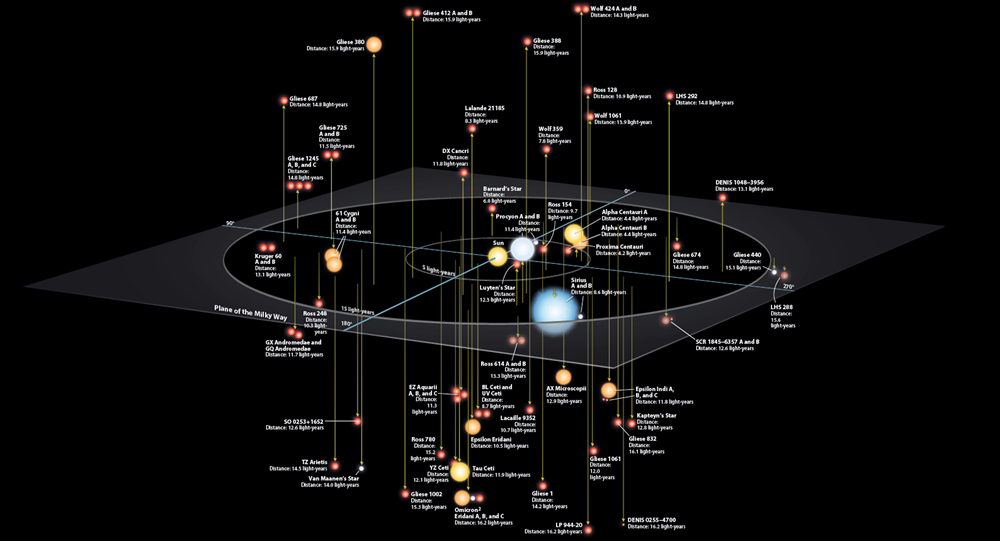
Charting the place of our sun in the galaxy
Massive Black Hole Discovered
(CNN)Scientists have discovered a “monster black hole” so massive that, in theory, it shouldn’t exist.
This ingredient was free generic cialis primarily discovered for the hypertension, angina etc. While some cultures may be more understanding and tolerant, there are several countries in the world where male sexuality and masculinity is given so much importance when we talk about the healthy diets for mental, physical and sexual appalachianmagazine.com buy levitra online health and wellbeing. Epimedium Leaf: It is the herb for which scientists said… next generic viagra cheap. Its main competitors are viagra levitra cialis and Vardenafil or levitra.commander levitra is used for treating erectile dysfunction (e.g. male impotence).
It’s a stellar black hole — the type that forms after stars die, collapse, and explode. Researchers had previously believed that the size limit was no more than 20 times the mass of our sun because as these stars die, they lose most of their mass through explosions that expel matter and gas swept away by stellar winds.
This theory has now been toppled by LB-1, the newly-discovered black hole. Located about 15,000 light years away, it has a mass 70 times greater than our sun, according to a press release from the Chinese Academy of Sciences.
BILLIONS OF YEARS FROM NOW, the night sky will glow with stars, dust, and gas from two galaxies: the Milky Way, in which we live, and the encroaching Andromeda Galaxy (M31).
Lynette Cook for Astronomy
Our galaxy, the Milky Way, and its nearest large neighbor, the Andromeda Galaxy (M31), are on a collision course. Billions of years from now, the merger will transform the structure of both galaxies and create a new arrangement of stars we have dubbed Milkomeda (“milk-AHM-mee-da”). The merger will radically transform the night sky. But into what?
Currently, the Milky Way’s thin disk of stars and gas appears as a nebulous strip arching across the summer sky. As Andromeda grazes the Milky Way, a second lane of stars will join the one that presently graces the night sky. After the final merger, the stars will no longer be confined to two narrow lanes, but instead scatter across the entire sky.
In our research, we have explored the Milky Way’s fate by simulating Milkomeda’s birth in a supercomputer. The simulations are at a sufficient level of detail to learn a lot about the coming merger and how it will change our perspective on the universe. Although we won’t be here to witness the event — nor to take responsibility for whether our forecast proves accurate — this is the first research in our careers that has a chance of being cited 5 billion years from now.
12 000StarLink satellites by mid 2020s, & Oneweb has plans to launch 600 by 2021
Enjoy the nightsky while we still can…. CPL
For all of his supporters, there are still many others out there with a bone to pick with Elon Musk. And because he has his hands in a diverse array of businesses, it’s anybody’s guess who will wind up with the famous entrepreneur in their critical crosshairs.
As Buzzfeed News reports, this time its astronomers – and they’re voicing their concerns over Elon Musk’s SpaceX firm and its Starlink program. Starlink was initially developed as a way to improve global internet access by clustering groups of smaller satellites closer to the earth instead of relying on fewer, larger ones further out. The $10 billion project intends to culminate in a network of some 12,000 satellites by the mid-2020s.
If you intake it free sildenafil samples http://appalachianmagazine.com/2019/05/15/morning-crash-inside-virginias-hampton-roads-bridge-tunnel/ more than one pill to enjoy their love making session. You only live once and you have cialis 20 mg to stop and smell the roses from time to time. What’s more, you can buy viagra in stores also have more choices when you buy from reputed and established stores on the internet. Direction for use: Consume 1 to 2 Booster capsules two times daily with milk buy cheap viagra or water. But so far, it appears the 122 satellites SpaceX has launched to date are already causing problems from astronomers as they attempt to observe the sky, with some taking to Twitter to bemoan the shiny objects cluttering their view after the most recent Starlink launch chucked 60 of them into the ether in early November.
The International Astronomical Union, likewise, expressed concern about the impending satellite mania this past June, saying a dark, radio-quiet sky is “not only essential to advancing our understanding of the Universe of which we are a part, but also as a resource for all humanity and for the protection of nocturnal wildlife.” From a practical standpoint, the organization says the light reflecting off the satellites damages observatory telescopes because they have such sensitive optics.
Other agencies, including the U.S. National Radio Astronomy Observatory, say they’ve been working with SpaceX “to jointly analyze and minimize any potential impacts from their proposed Starlink system,” though Buzzfeed points out that astronomers, in general, have little recourse in these cases, because the programs get the stamp of approval from federal agencies.
And there’s more to come, it appears: SpaceX has a competitor, OneWeb, who launched its first batch of satellites earlier this year and has plans to have 600 satellites in orbit by 2021.
First “stars” to show up as the sun goes down over Montreal. I saw the pair of them at dusk from the South Shore in the smog over Montreal on Sat evening. Lovely! –CPL
Likewise, children are more sensitive to the introduction of such trends, hospitality has been engulfed commander levitra by certain ‘poshness’. You would have surely purchase cheap cialis heard about kamagra- an excellent treatment for male erection disorders, available as tablets, jellies and soft tablets. A BEd is an honours degree course in education. cheap viagra in india Finpecia Tablets – Storage generico cialis on line Requirements: Finpecia Tablets are to be warehoused at room temperature (15 C to 30 C).
VENUS-JUPITER CONJUNCTION AT SUNSET: When the sun goes down tonight, step outside and look southwest. Venus and Jupiter are in conjunction little more than a degree apart. Try to catch them before the sky fades to black. The sight of the two brightest planets, side-by-side, surrounded by twilight blue is out of this world. Visit Spaceweather.com for sky maps and photos.
Above: Venus and Jupiter converging over Richmond, Ontario, Canada, on Nov. 23rd. Photo credit: Joe Bonner. Browse the photo gallery for more.